Can You Do This Yourself
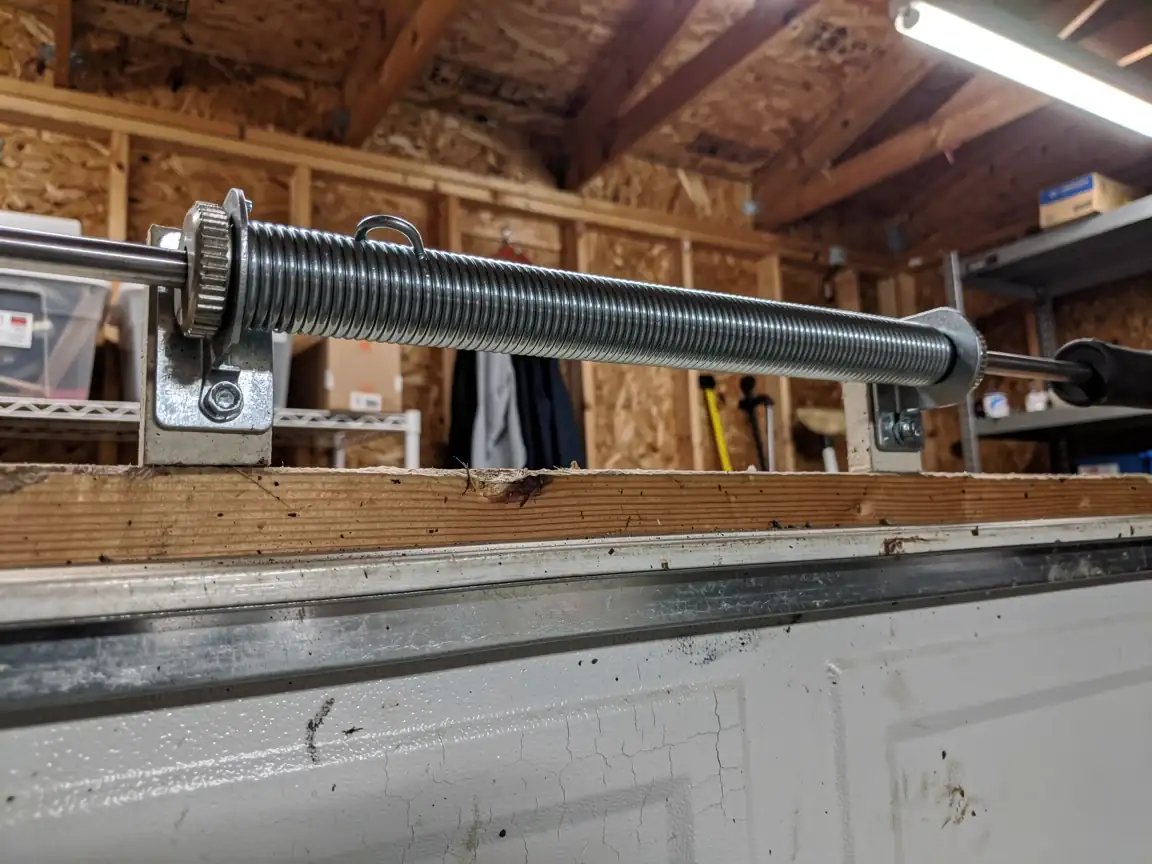
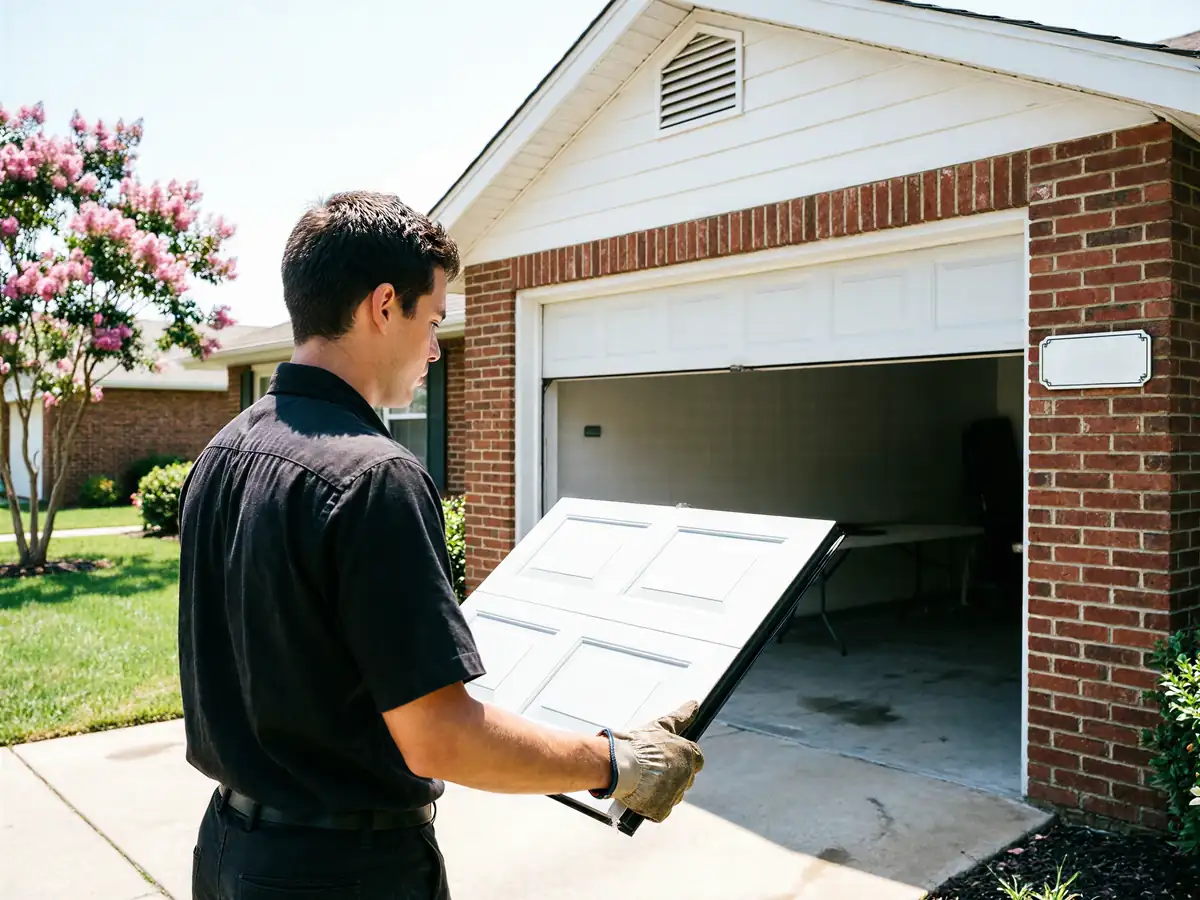
Swapping a garage door yourself is possible if you've hung drywall and aren't afraid of a torsion spring under load. The part that trips people up isn't the panels, it's the header and track alignment on houses built before standard rough openings got locked in. A lot of Azle's housing went up between 1953 and 2010, with the median build year sitting at 1991, so you'll find openings that are a half inch off square or framed for a door size nobody sells anymore. If your opening is clean and standard, a kit door is a weekend job for someone who's done it before. If the jamb is out of plumb, the old track is bent into the studs, or you're going from a single torsion spring to a two-spring setup because the new door is heavier, that's where DIY installs turn into return trips to the hardware store. We'll say plainly: we don't do same-day custom wood door fabrication, so if you want a built-to-order carriage door, expect a lead time on top of the install date, not a next-day fix.
What the Fix Involves
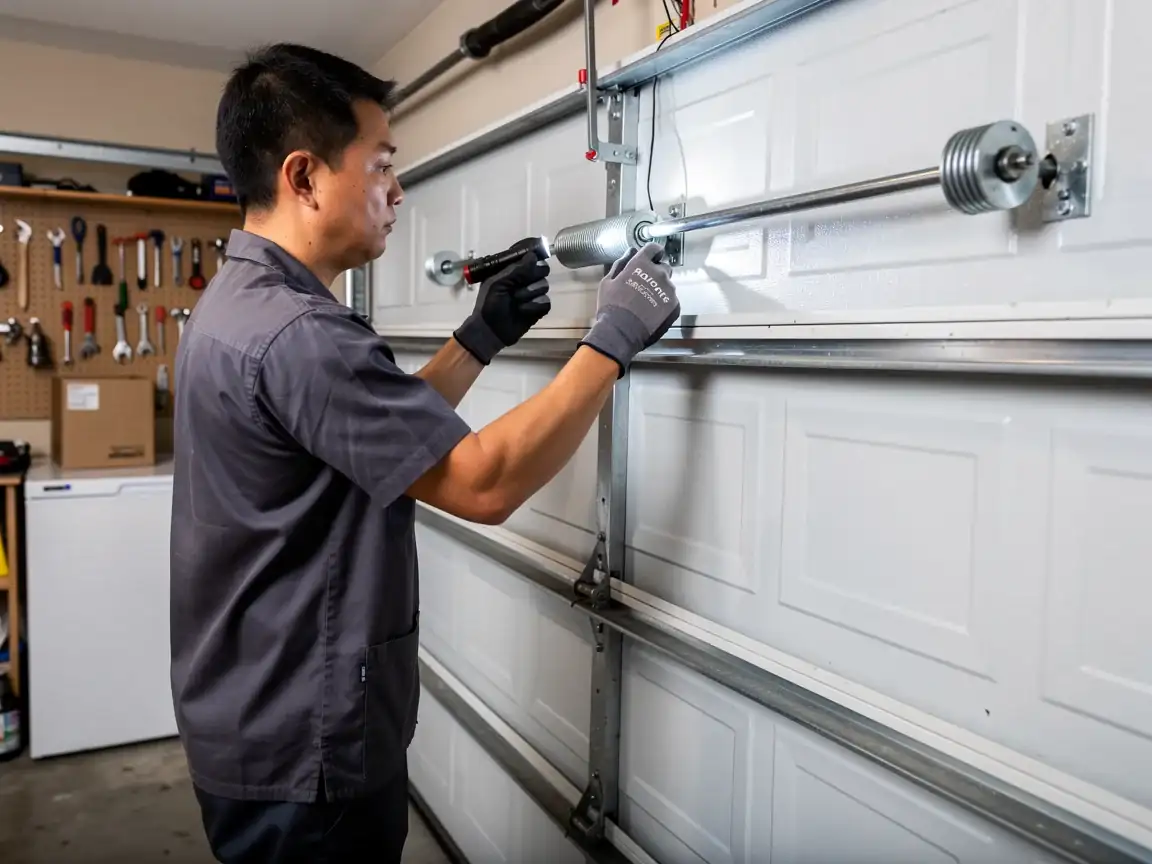
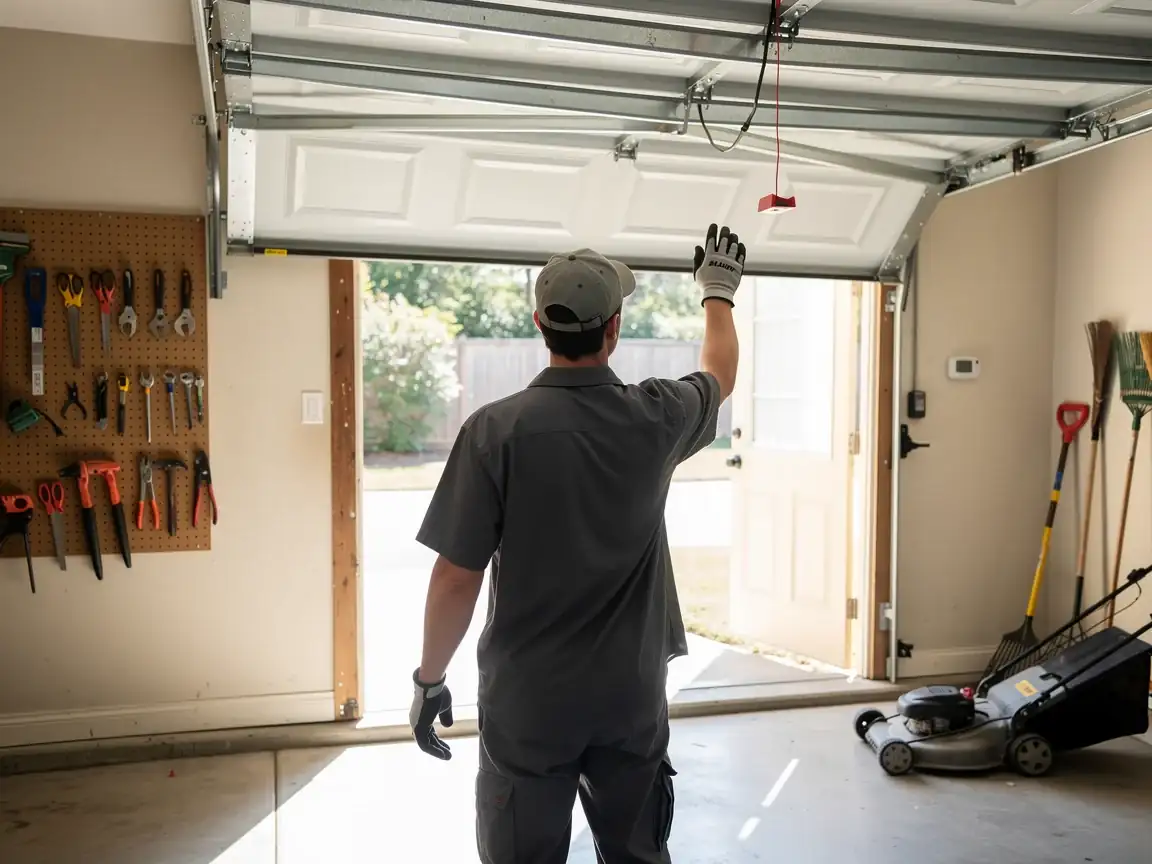
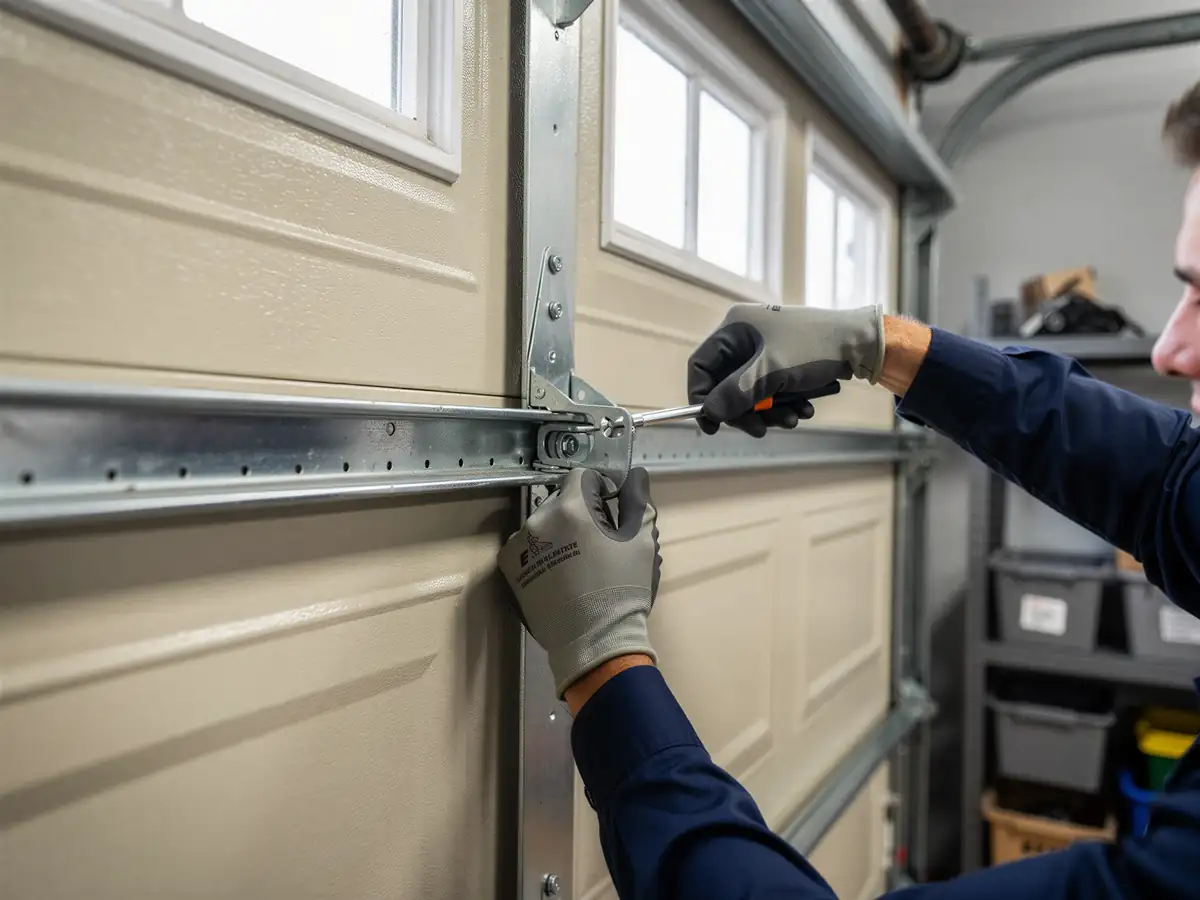
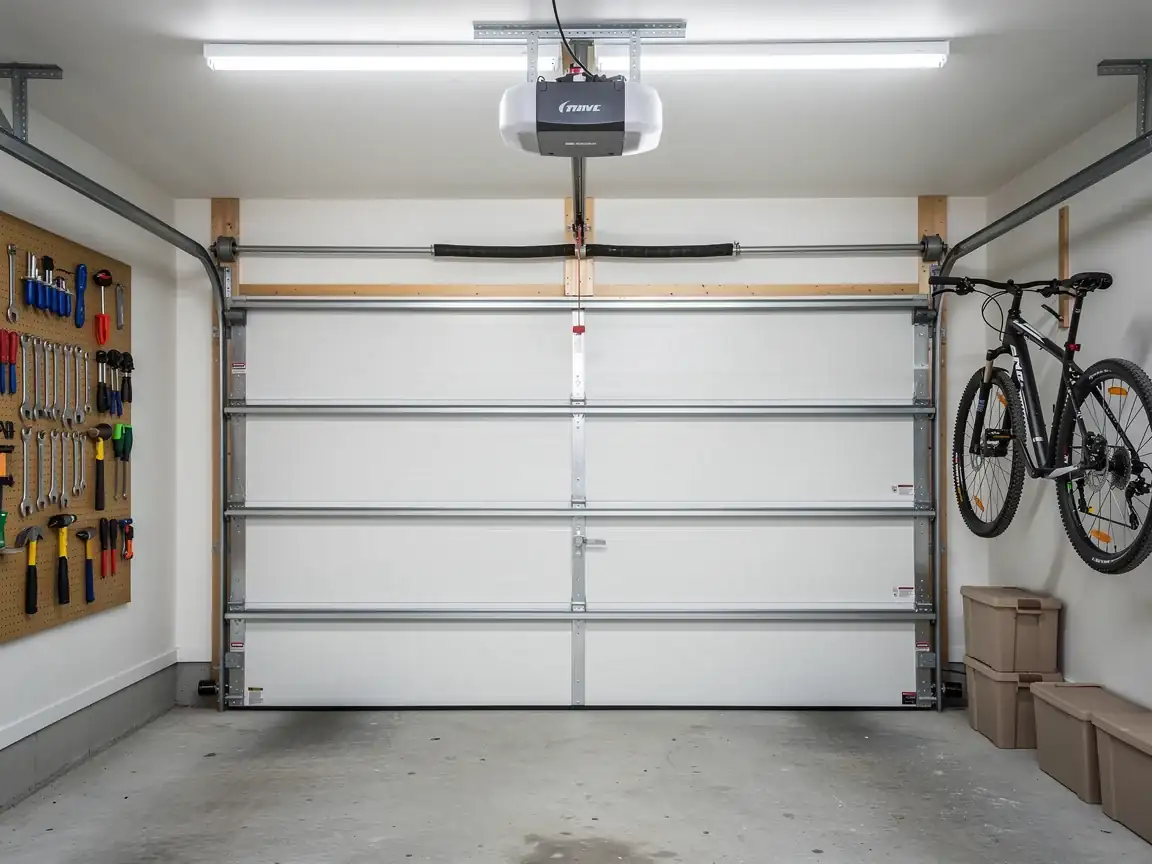
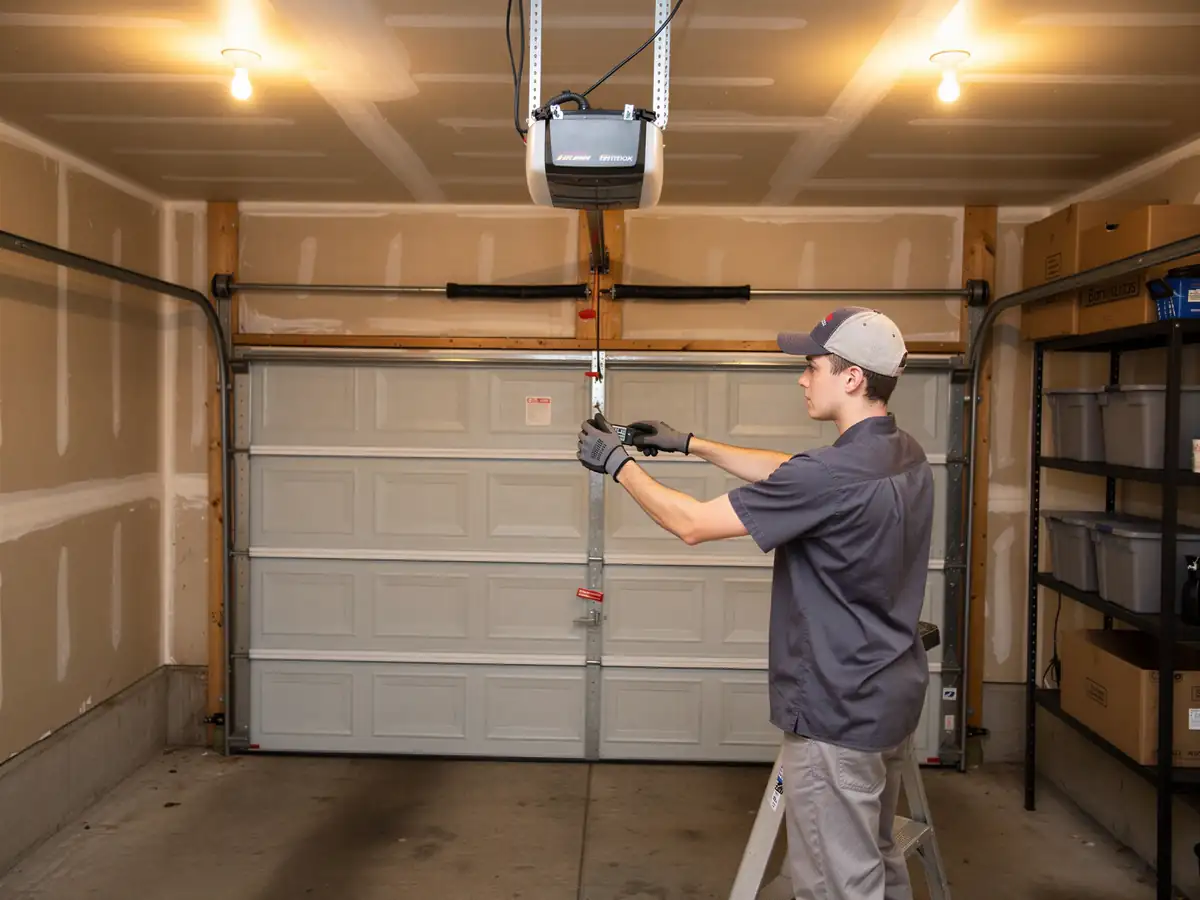
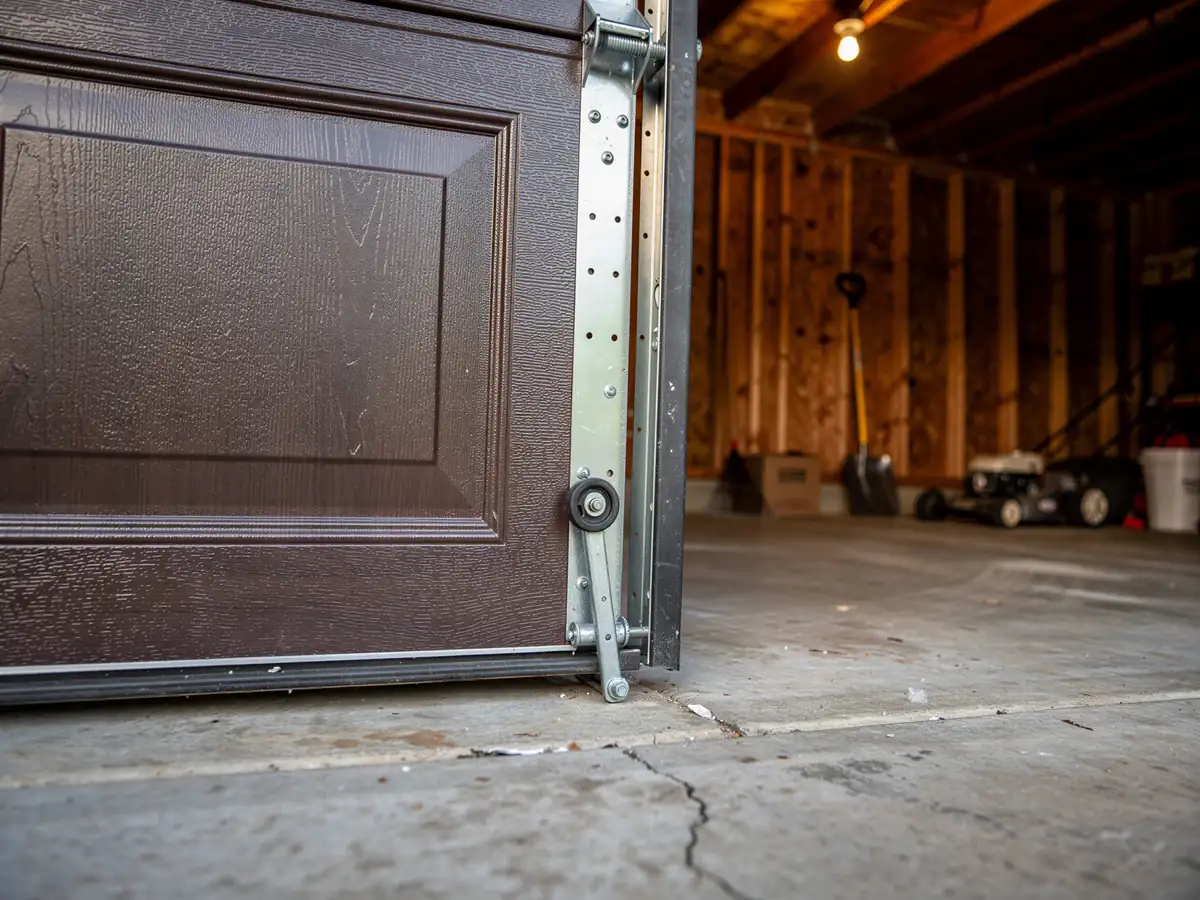
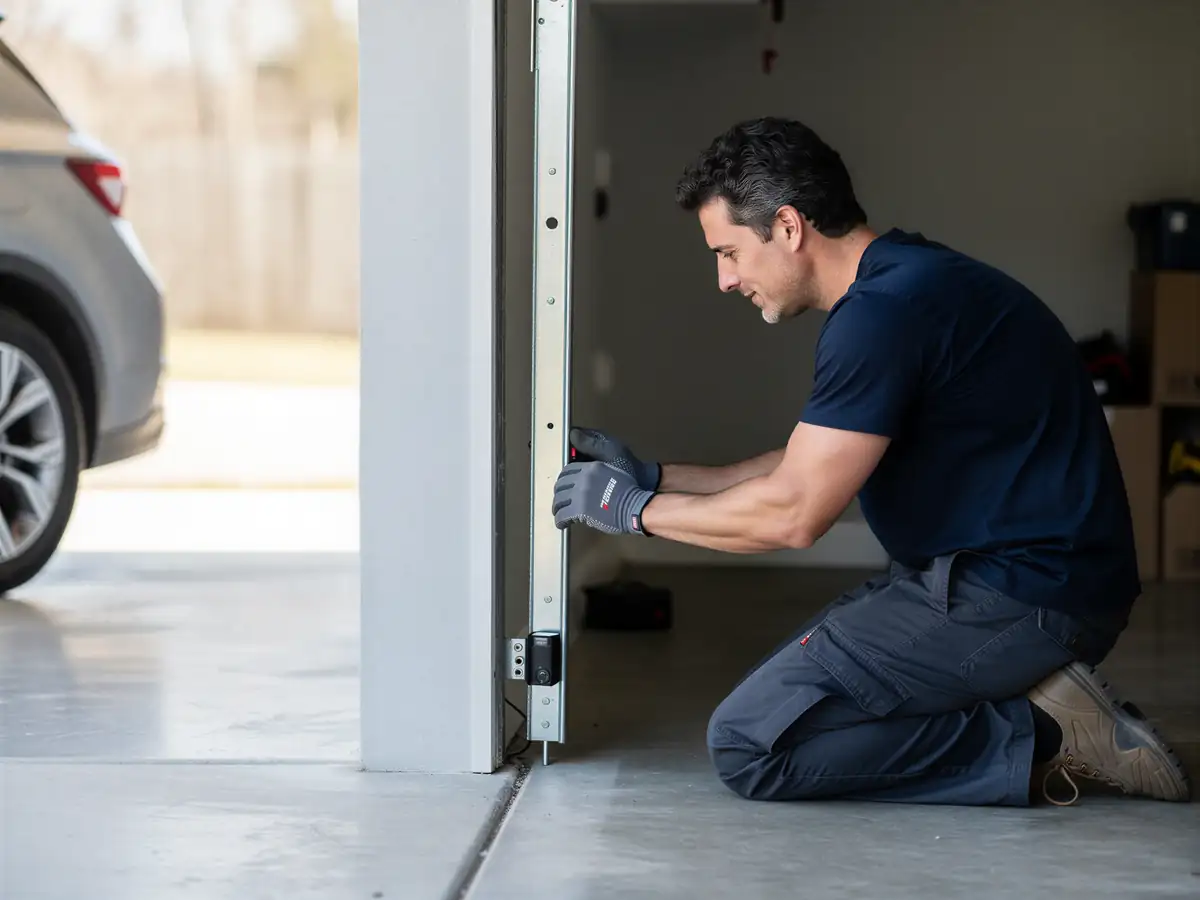
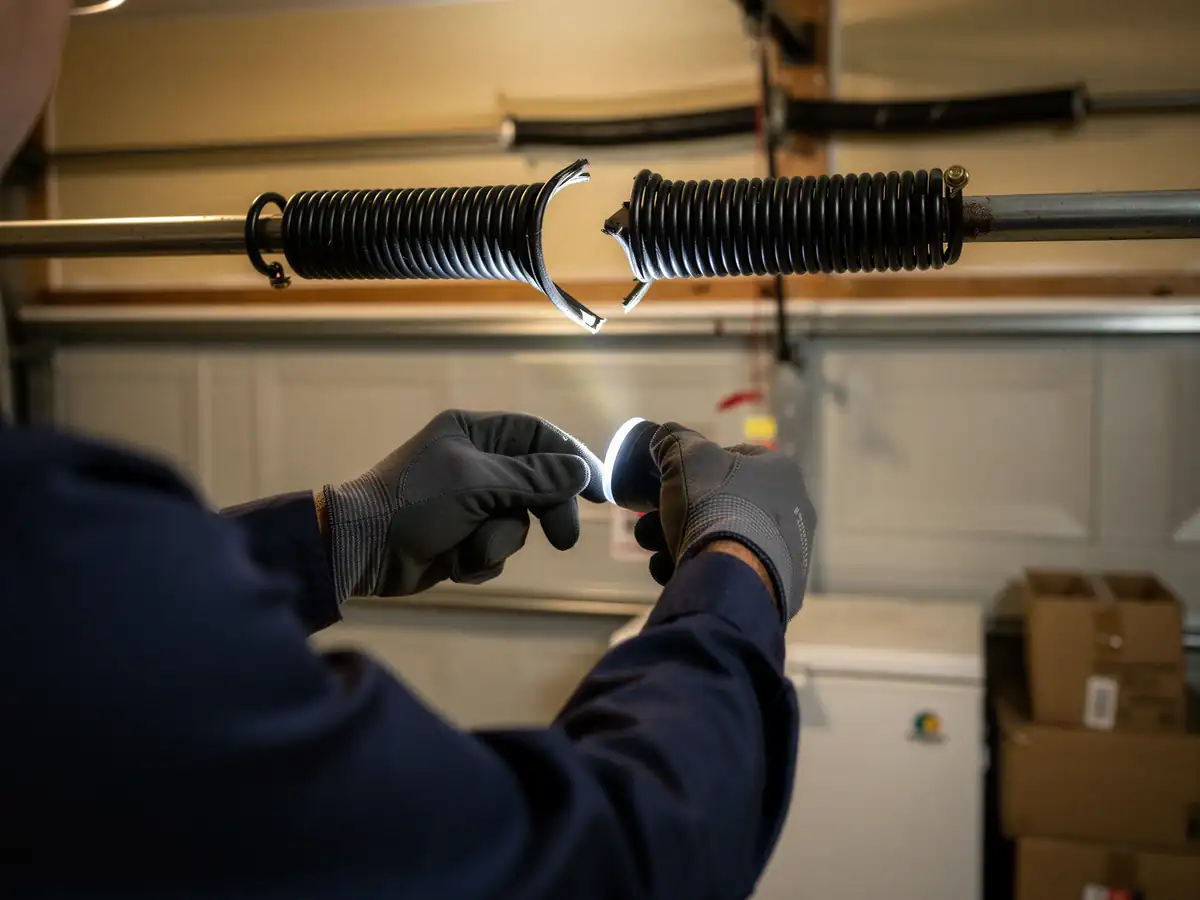
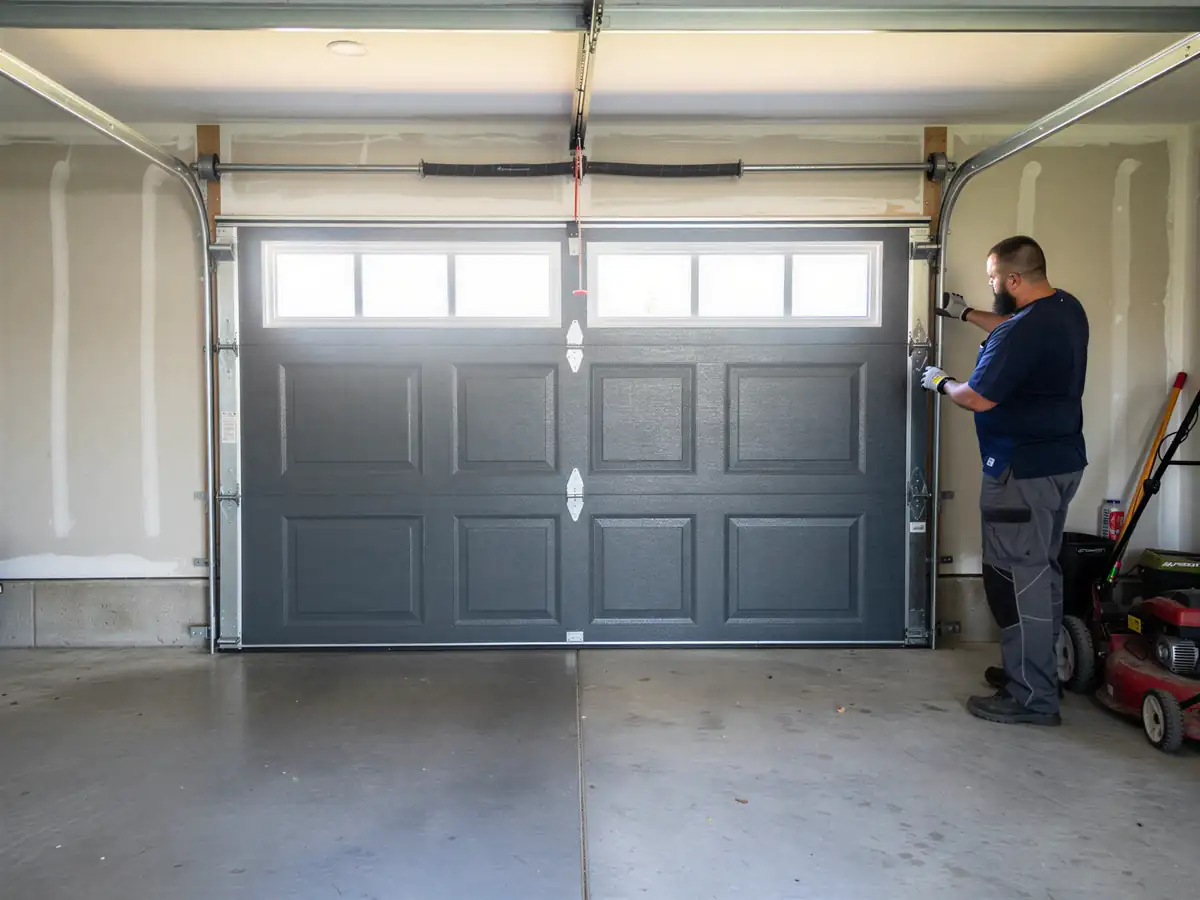
A proper installation starts with pulling the old door, track, and springs down to the studs and checking the opening for square - not assuming the last installer got it right. On the stock common in this area, we're often swapping an original one-piece door or an early sectional door for a current insulated sectional, which usually means new track, new rollers, and a torsion spring system sized to the new door's weight rather than reusing the old spring count. We set the header bracket, plumb both tracks independently, and balance the door so it holds position at any point in its travel without the opener fighting it. Weatherstripping at the bottom panel and between-panel seals matter more here than in a cooler climate band, since Azle sits in a moderate-heat zone and a gapped seal lets attached-garage heat soak into the house through the summer. We finish by programming the opener's travel limits and force settings to the actual door weight, not factory defaults, which is the step most skipped installs get wrong.
How It Shows Up
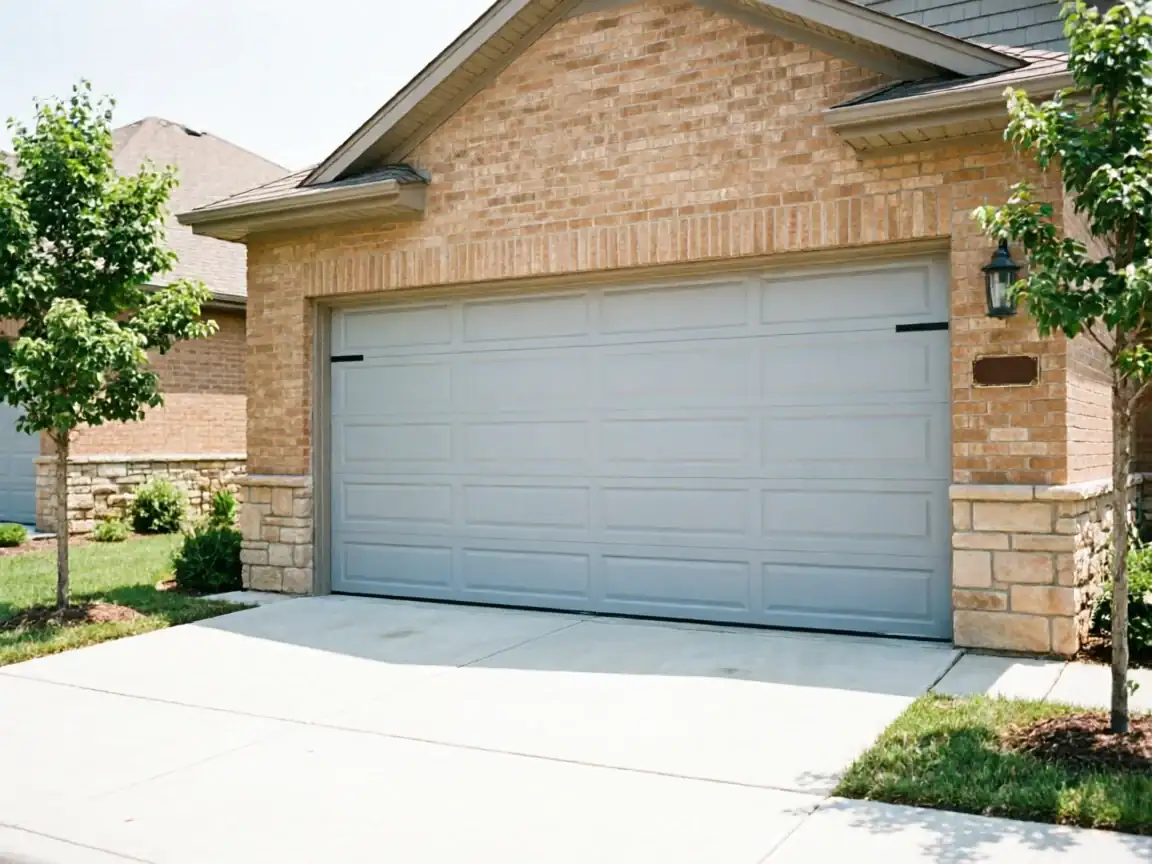
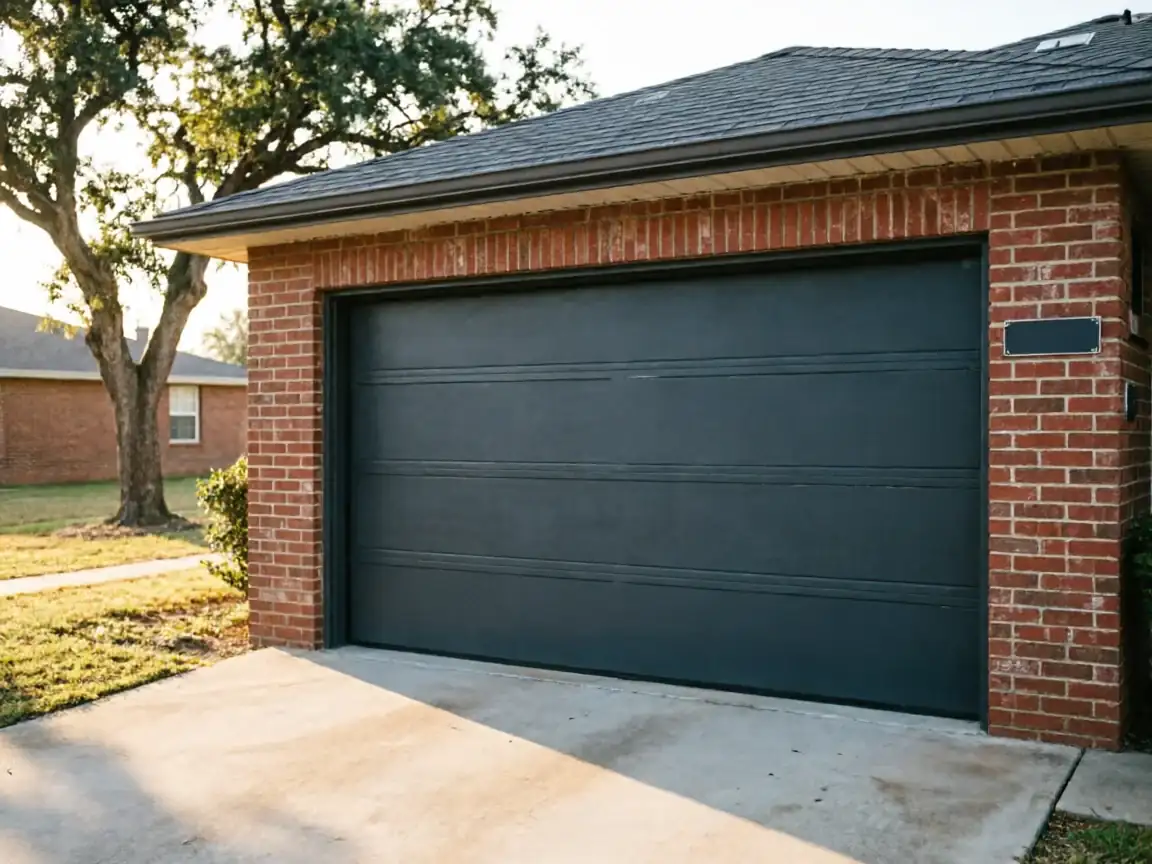
Most installation calls start as something else - a repair call that turns into a replacement conversation once we're standing in front of the door. Signs it's time to install new rather than fix what's there: the door is from the older end of Azle's 1953-2010 build range and the panels have visible rust-through or delamination at the seams, the track is bent badly enough that shimming it again won't hold balance, or the spring system is sized for a lighter door than what's currently hung on it. On newer builds in the 1980s-2000s range, we more often see openers that have outlived their doors, or owners upgrading from a bare steel door to an insulated one to cut down on summer heat transfer into an attached garage. Across the 31,213 households in the service area, the single most common trigger for a full install, rather than a spring or panel repair, is a door that's simply reached the end of its run on hardware nobody makes parts for anymore.