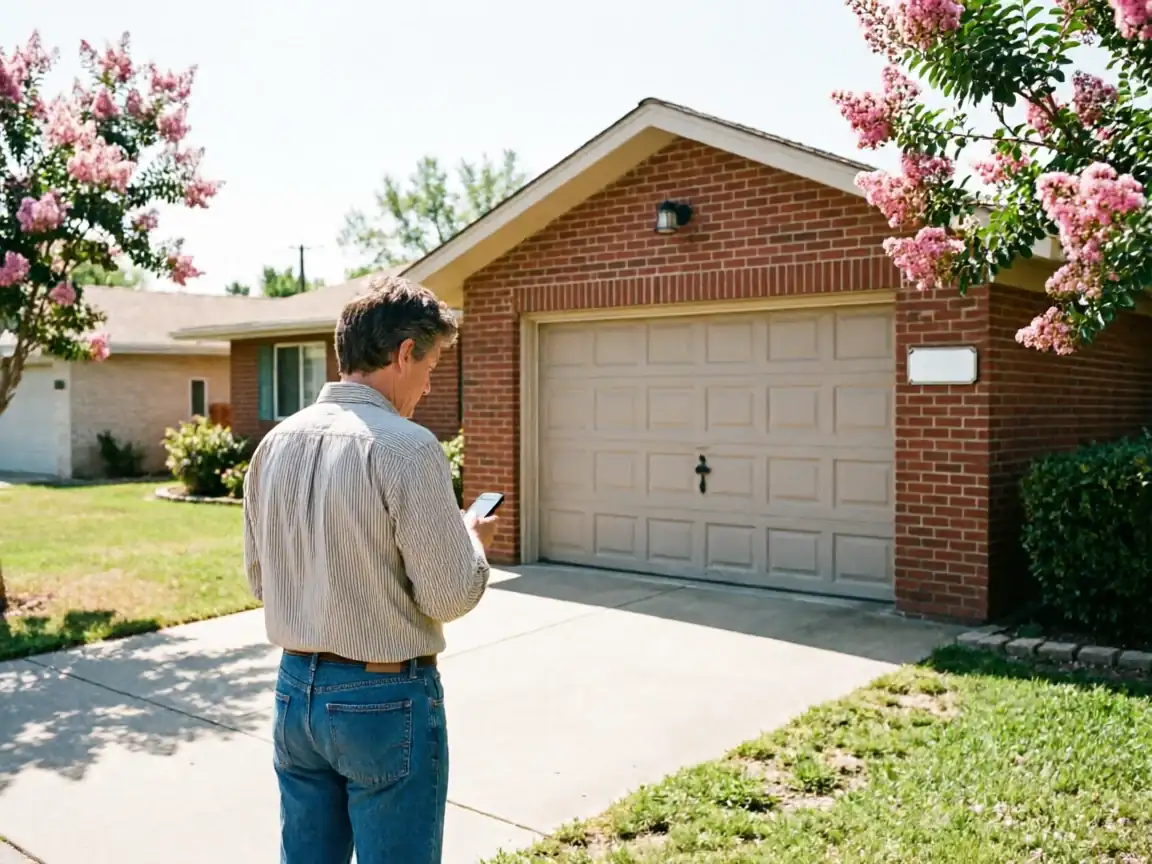
The Cost of This Job
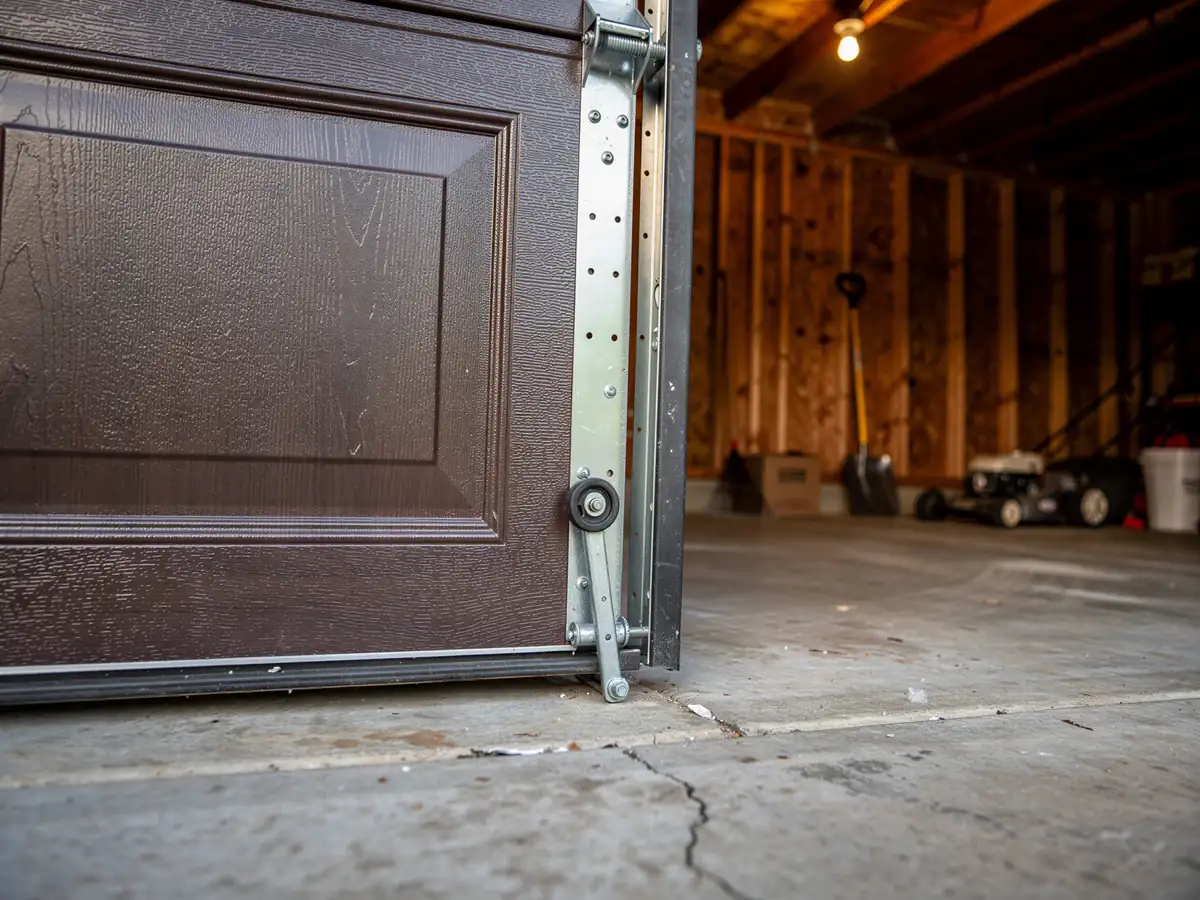
An off-track door usually means one of two things: a roller has worn through and popped out of the track, or the track itself has pulled away from the jamb because a cable snapped or a hinge bent. Reno homes, most built around 1992, are old enough now that the original steel rollers and the galvanized track brackets are past their design life. That's the fault we see most on this side of the service area - not a dramatic snapped spring, but a slow give in hardware that's been working for three decades.
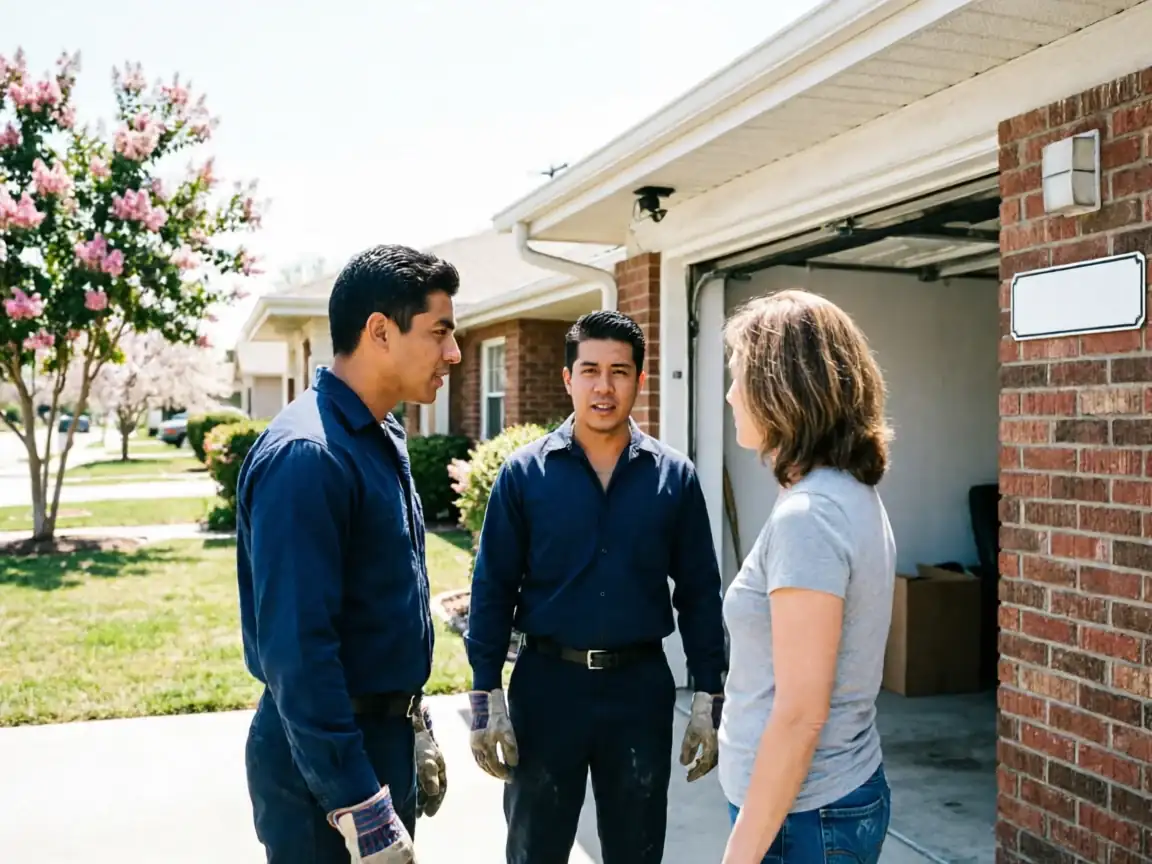
What it costs depends on which of those two problems you've got. A bent track that just needs to be pulled back into alignment and re-screwed to the jamb is a straightforward labor job. If a roller has shattered or a hinge has torn loose from the panel, you're adding parts, and if the cable that runs the track snapped and let the door drop crooked, that's a cable replacement on top of the track work. We don't quote a number here because we haven't seen your door - the honest answer is that the price swings a lot between "tighten and realign" and "replace track, rollers, and cable." We'll tell you which one you've got before we touch anything.
Can You Do This Yourself
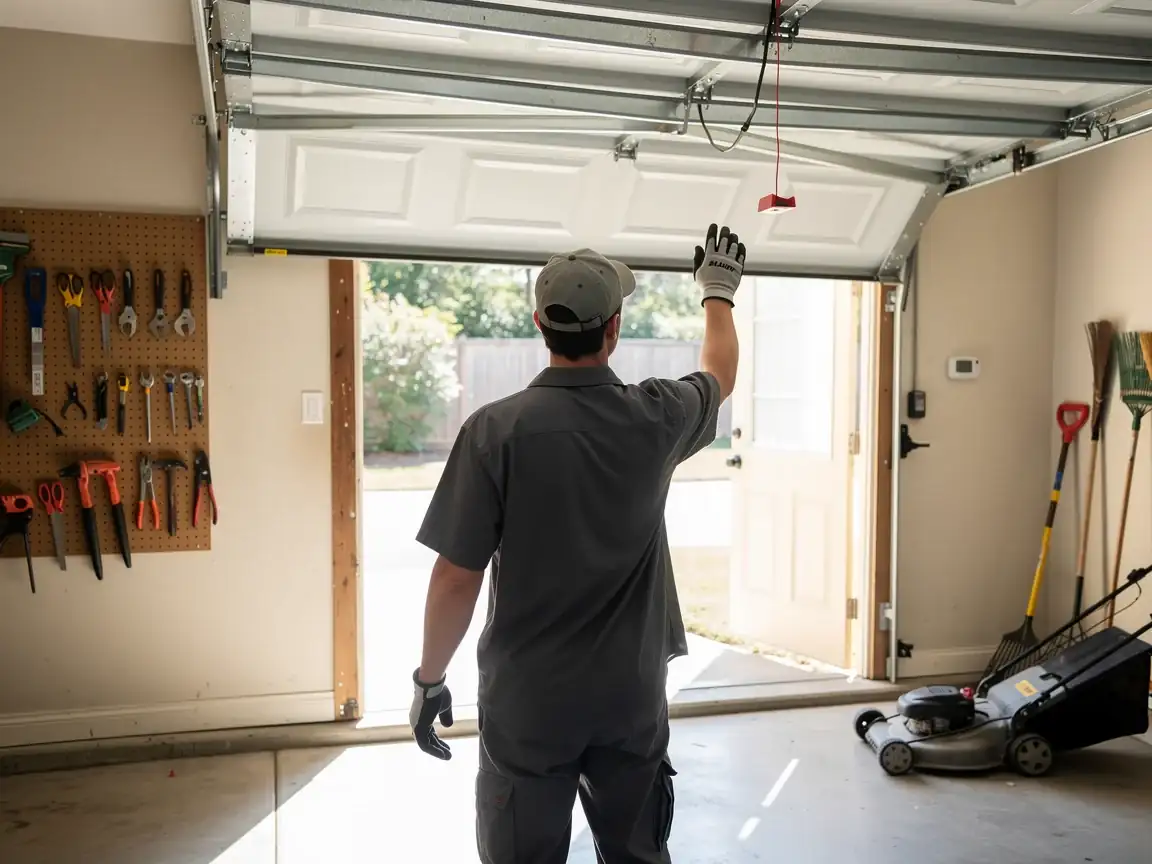
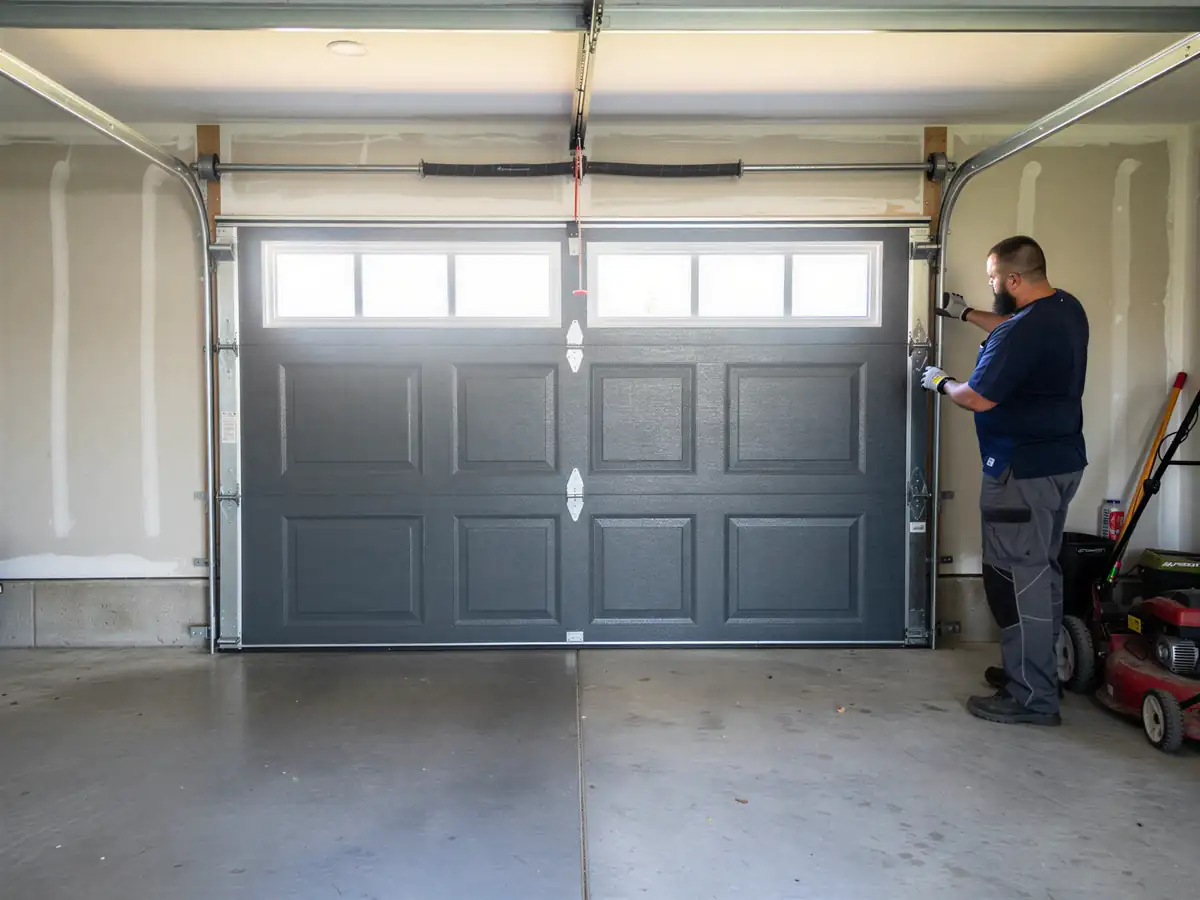
You can usually tell if the track is just loose versus torn off the wall, and that matters before anyone touches the door. If the track bracket is still screwed into the jamb and the door has simply jumped the rail at one roller, some homeowners can carefully walk the panel back onto the track by hand with the opener disconnected - that's a two-person job at minimum, and you do it with the door most of the way down, not up.
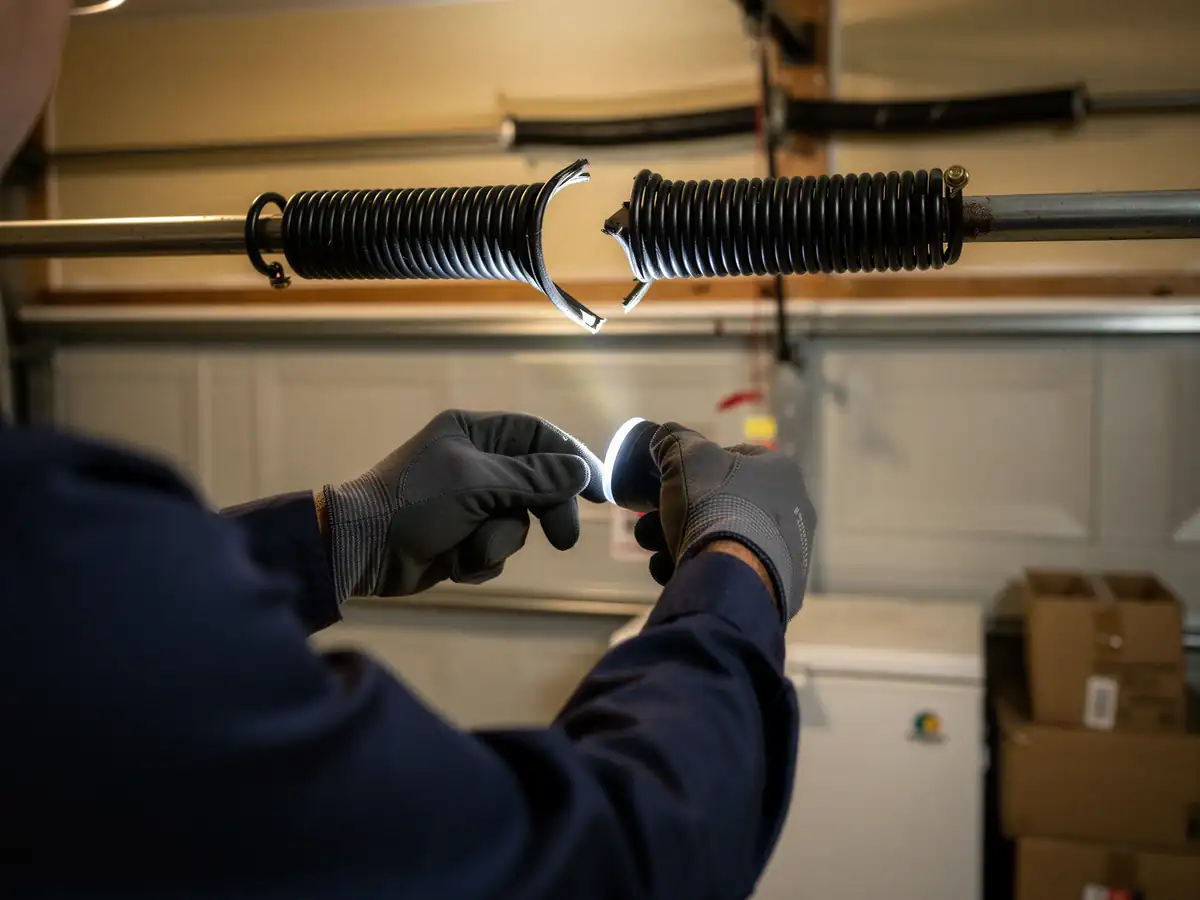
What you should not do is yank on a door that's hanging crooked with the springs still under tension, or try to force a panel back onto a track that's bent or pulled loose from the wall. A torsion spring holding a tilted door is storing a lot of force, and a bent track that looks fine from six feet away can have a sharp edge at the seam. If the door won't move freely with a light pull, or if you see the track pulled away from the framing rather than just a roller out of the channel, that's a call-a-pro job, not a weekend fix.
What the Fix Involves
First we check whether the track bent, the roller failed, or a cable let go
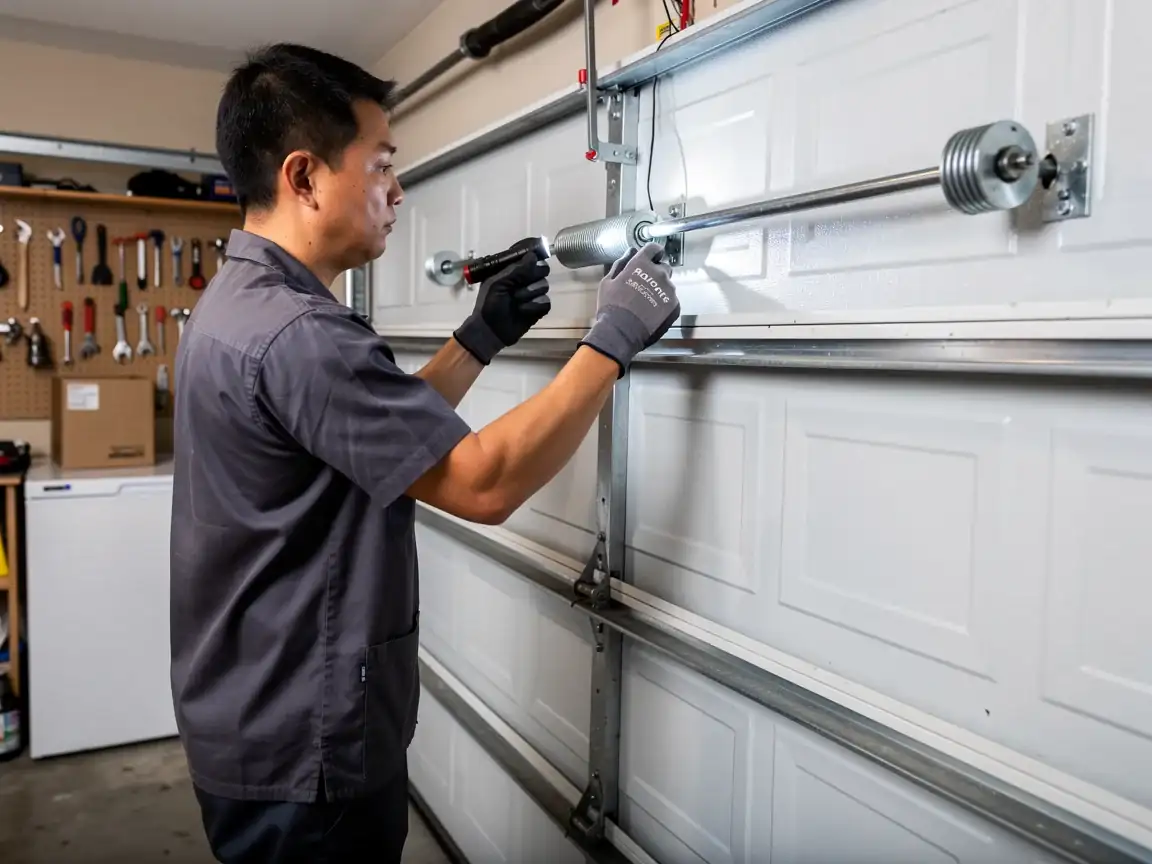
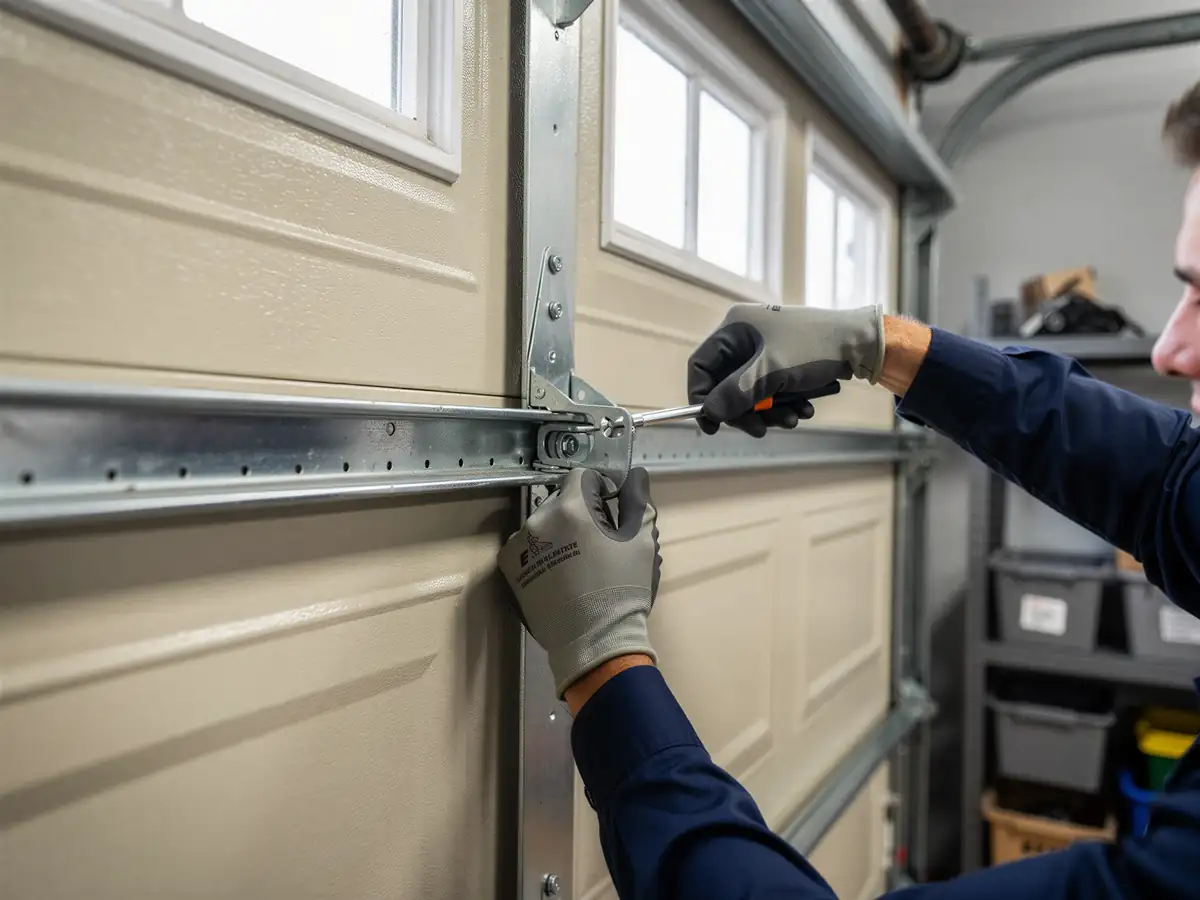
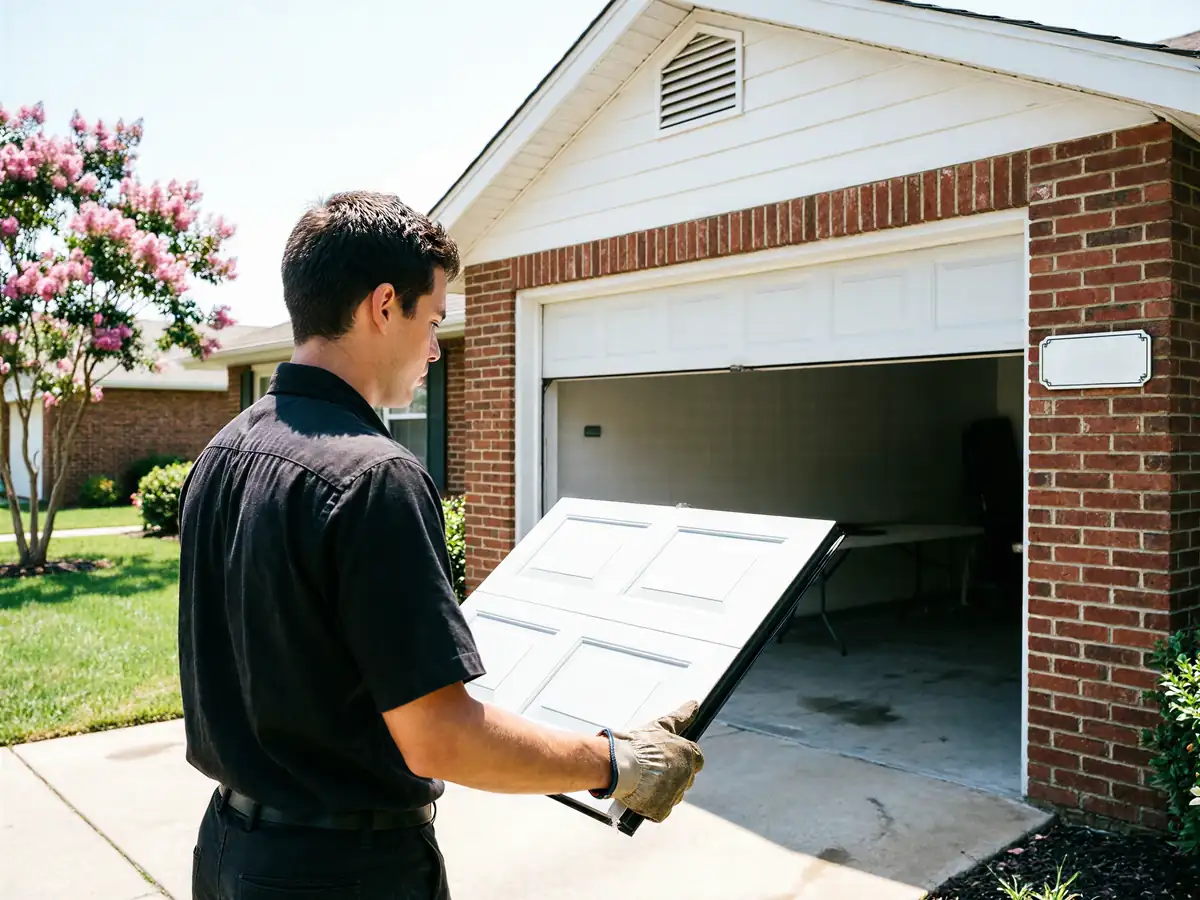
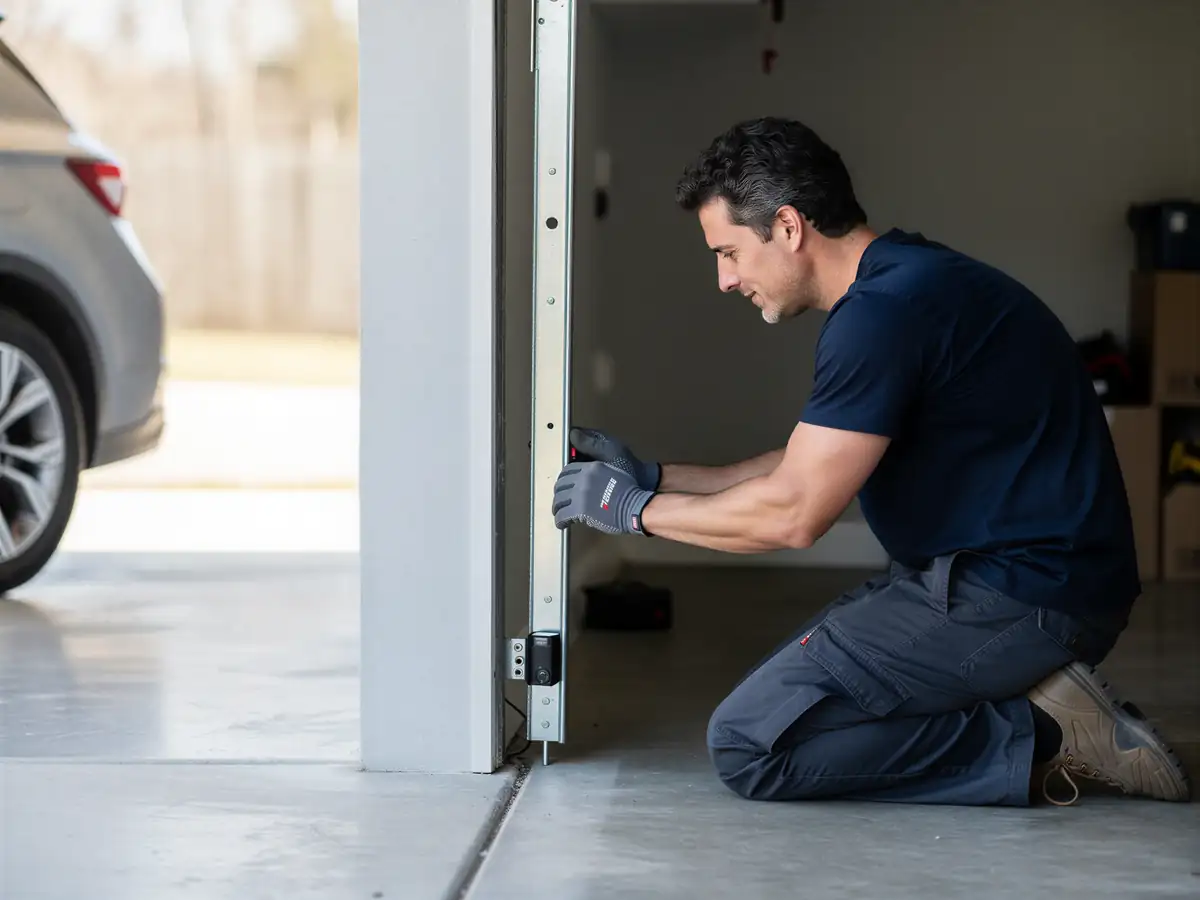
Those three faults get fixed differently, and guessing wrong wastes a trip. If it's a bent track, we pull it back to plumb, re-anchor the brackets to the jamb, and run the door through a full cycle to make sure it rides smooth top to bottom. If a roller shattered, we replace the roller and inspect the ones next to it, since rollers on the same door usually wear at close to the same rate once they hit 25-plus years of service.
If a cable snapped and let the door hang off one side, we replace the cable, check the drum it wraps around
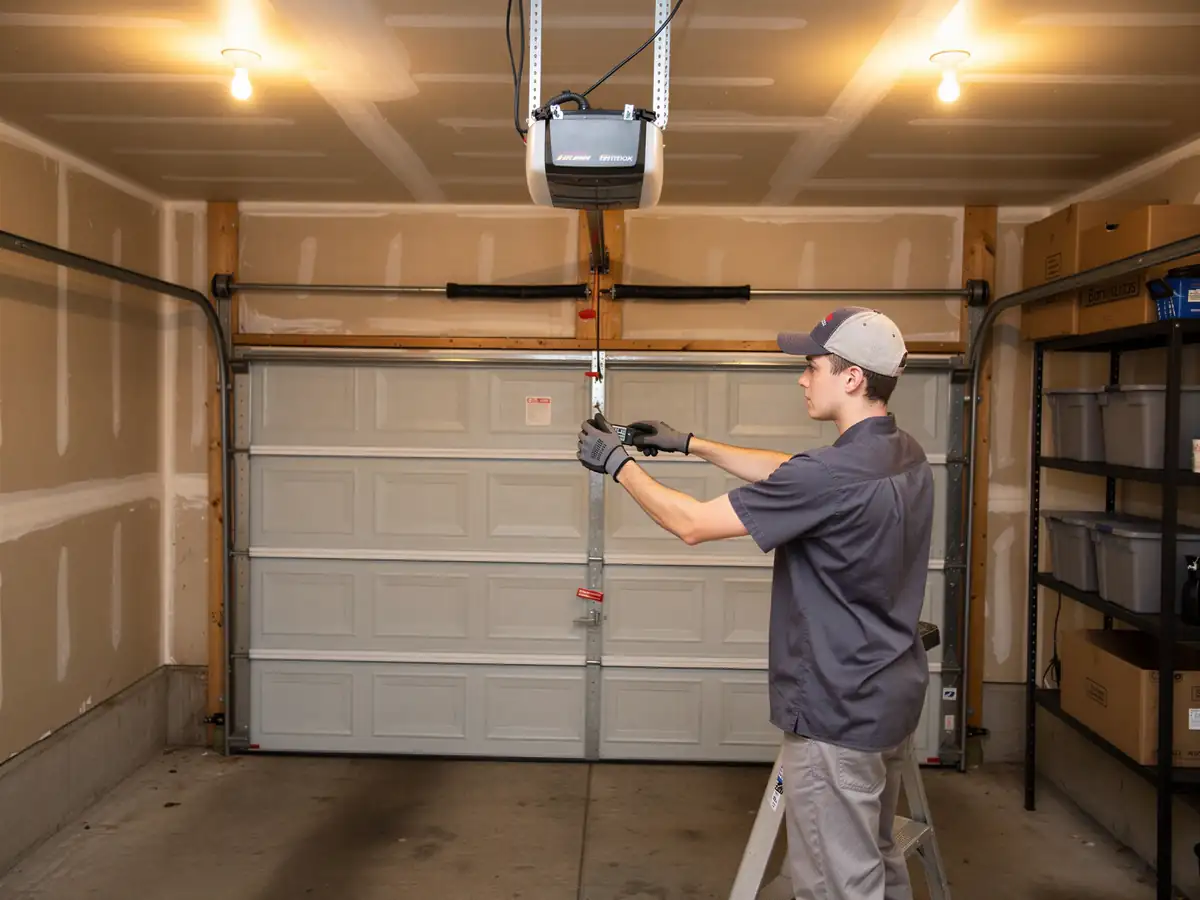
And rebalance the door before we call it done - a door that's off-balance after a repair will just come back off the track again inside a year. We'll also check the torsion spring tension while we're in there, since a door with a weak spring tends to stress the track and rollers harder every time it runs, which shortens how long a repair lasts.
Why It Happens Here
Reno sits about four miles from our Azle shop, and the housing here mostly went up in the early 1990s, with a median build year around 1992 - squarely inside the broader 1953-2010 range we see across the wider service area. That generation of garage door came with steel rollers on painted steel track, hardware that was standard for the era but wasn't built to run forever without attention.
The area's heat load is moderate rather than extreme, so we're not dealing with the kind of expansion-and-contraction cycling that cracks track brackets in hotter climates - the failures here are closer to straightforward wear. Thirty-plus years of daily cycles on original hardware is enough on its own: a roller wears thin, a hinge loosens at its pivot, and the next hard stop or gust against the panel is what finally pulls it off the rail. It's less a weather problem and more an age-of-the-door problem, which is why the fix is almost always hardware replacement rather than anything structural.