What the Fix Involves
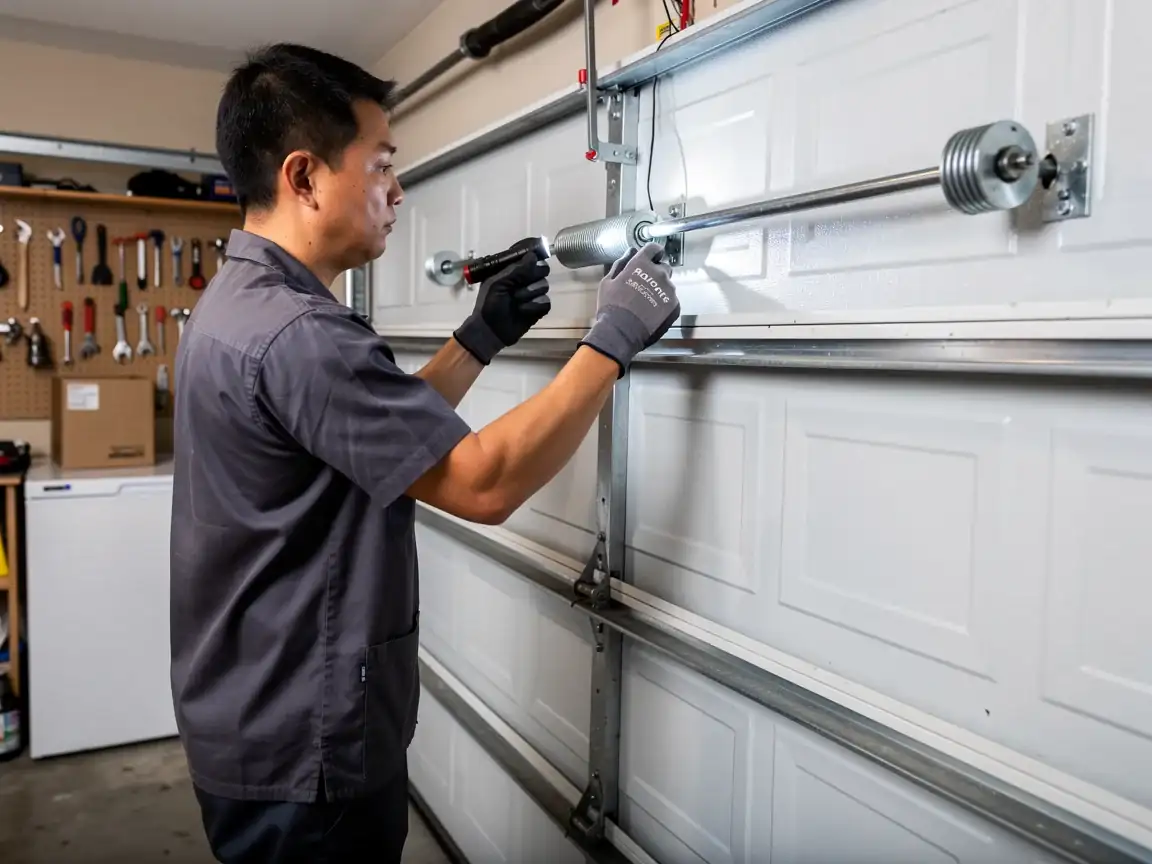
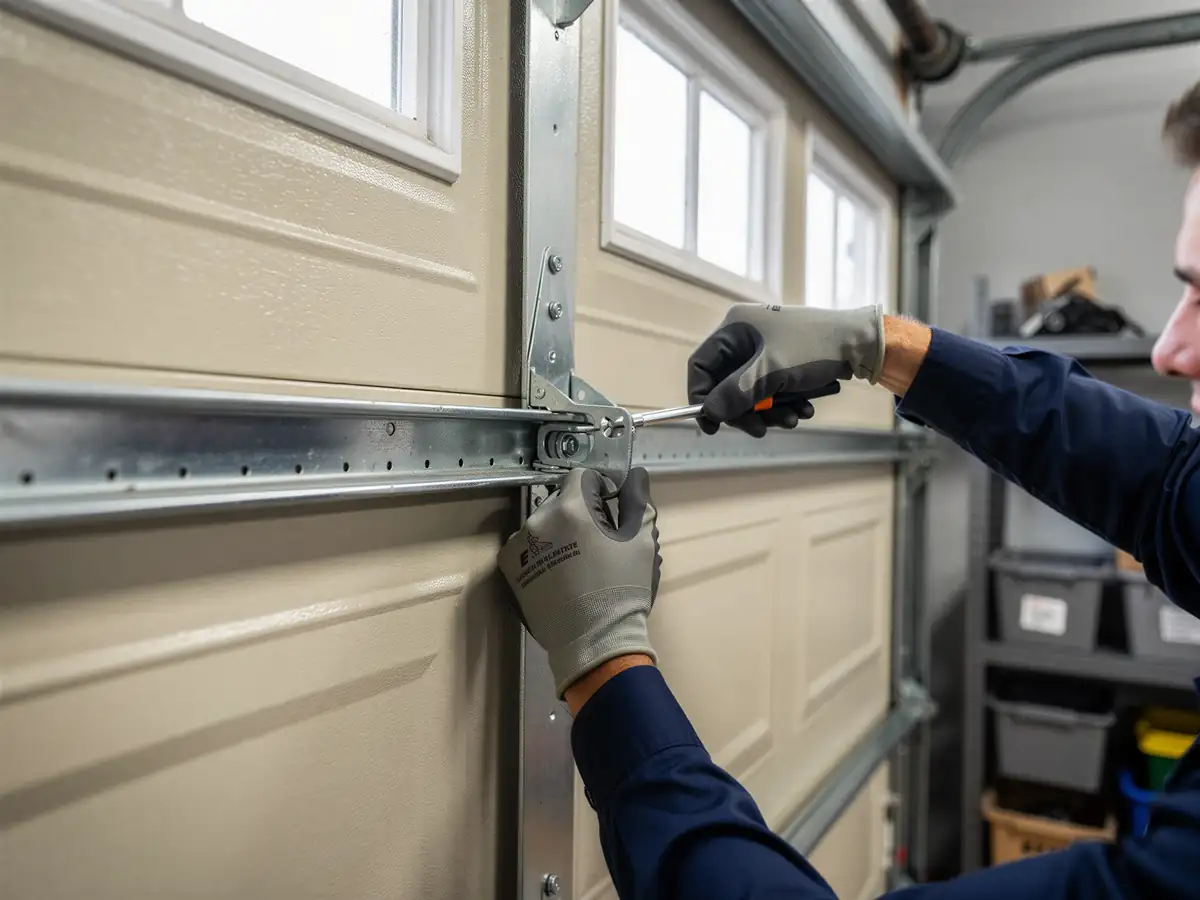
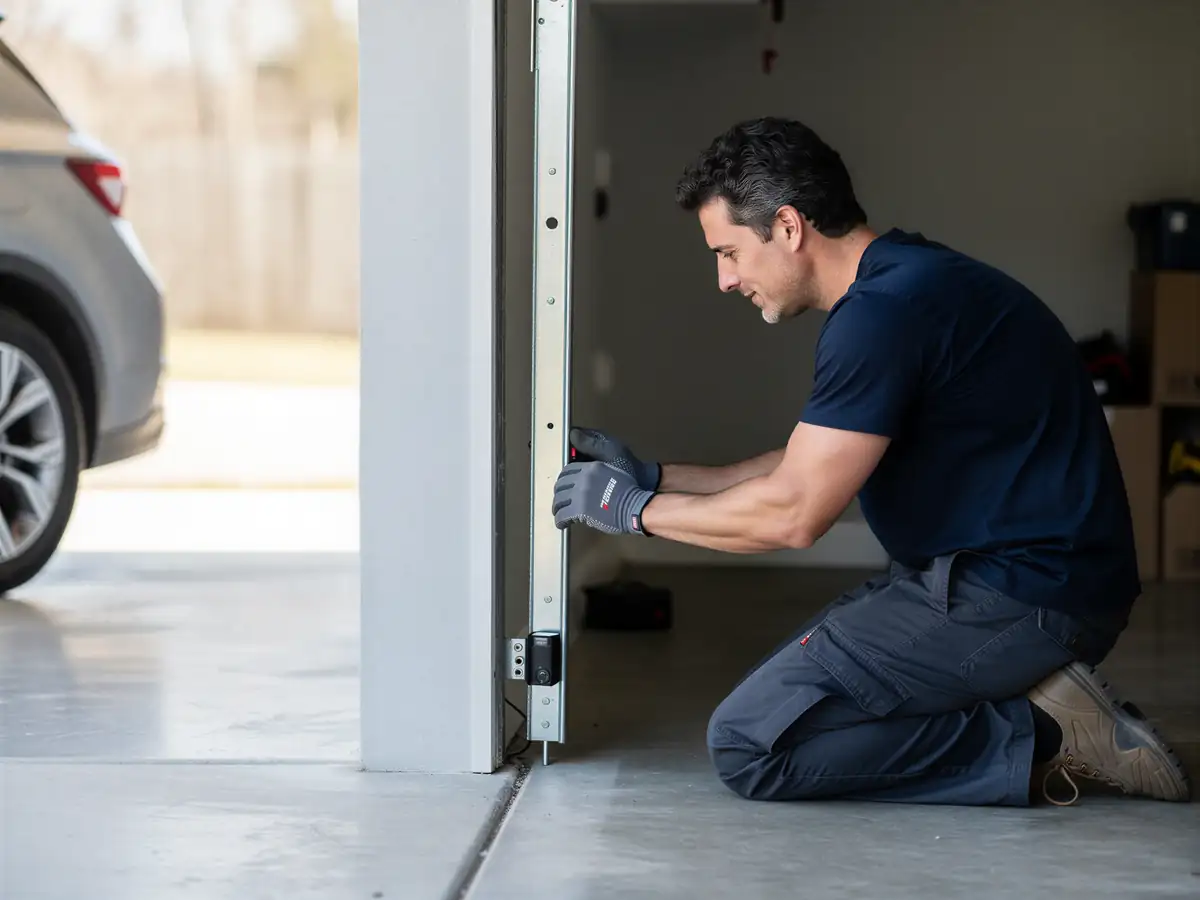
Most houses in Springtown were built around 1986, and a surprising amount of the garage door hardware from that build year is still hanging there untouched. Nobody swaps a torsion spring or a set of rollers unless something breaks, so if your house hasn't had a repair yet, you're likely running on 35-plus year old steel. An emergency call here is rarely about one bad part in isolation - it's about a spring that finally gave out after decades of cycles, pulling a cable off its drum or letting a panel drop crooked in the track. The fix starts with getting the door safe: spring disconnected or replaced, cable re-seated, panel checked for bend. We don't patch a dying spring with a temporary wind-down and call it done - if the rest of the hardware is original 1980s stock, we tell you that up front, because one part failing on a 35-year-old system usually means its neighbors aren't far behind. We travel from Azle, about 10 miles out, so we're not sitting in Springtown with a truck idling, but we carry the parts that match this era of door on the truck before we leave.
How It Shows Up
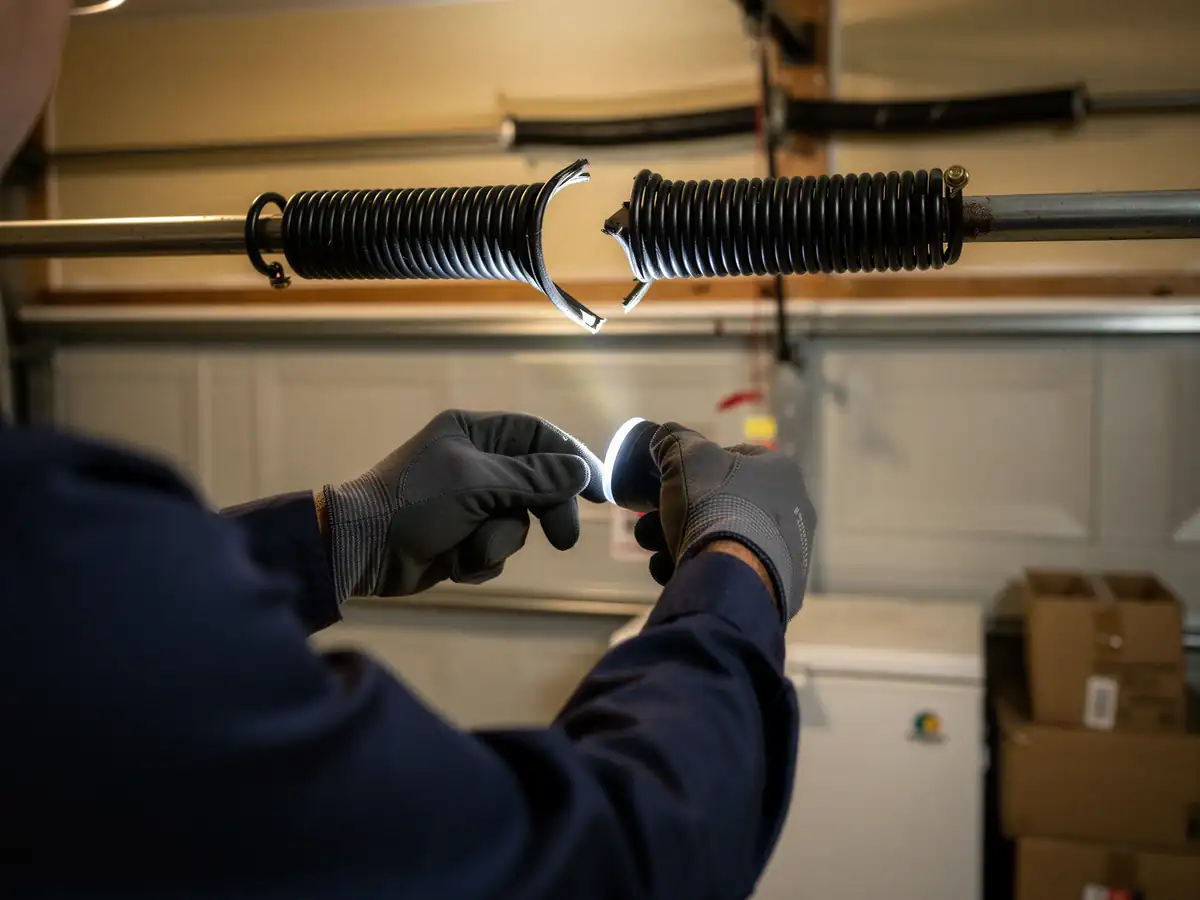
The classic sign is the door that won't budge, with the opener straining or humming instead of lifting - that's almost always a spring, not the motor. On original hardware this old, you'll also see a cable that's frayed or jumped the drum, usually on one side, which tilts the door crooked in the track rather than stopping it dead. Some owners hear it before they see it: a loud bang from the garage, which is the spring letting go. Others notice the door closing fine but refusing to open past a foot or two, which points to a broken spring taking the full weight off the opener's gears. With roughly 1,176 households in Springtown and a lot of them sitting on hardware from the same mid-1980s build window, these failures tend to cluster by age rather than by weather event - it's wear catching up with steel that's been doing the same job since Reagan was in office.
Why It Happens Here
Springtown sits in a moderate-heat climate band, not the kind of extreme swing that cracks seals or warps panels fast, so the failures here are driven more by age than by weather abuse. A torsion spring is rated for a set number of open-close cycles, and once a house crosses the 30-to-35-year mark on its original spring, that cycle count catches up regardless of how gently the door's been used. Because most of this area's housing went up in the same decade, you get a pattern: a run of springs failing not from any one storm or heat wave, but simply because they were all installed around the same year and they're all approaching the same wear ceiling now. It's less dramatic than a weather story, but it's the real driver.
Stocked Parts
We stock torsion springs, cables, rollers, and the hinge and track hardware sized for the doors common to the 1980s-90s building stock across this part of the service area, which covers Springtown along with nearby towns on the same build timeline. What we don't always carry on the truck is a replacement panel for an older, discontinued door style - those sometimes need to be ordered, and we'll tell you honestly if that's the case rather than cobbling together a mismatched fix. If your door is original to an 1986-built house, there's a decent chance the spring and cable combination is one we carry without a special order.