What the Fix Involves
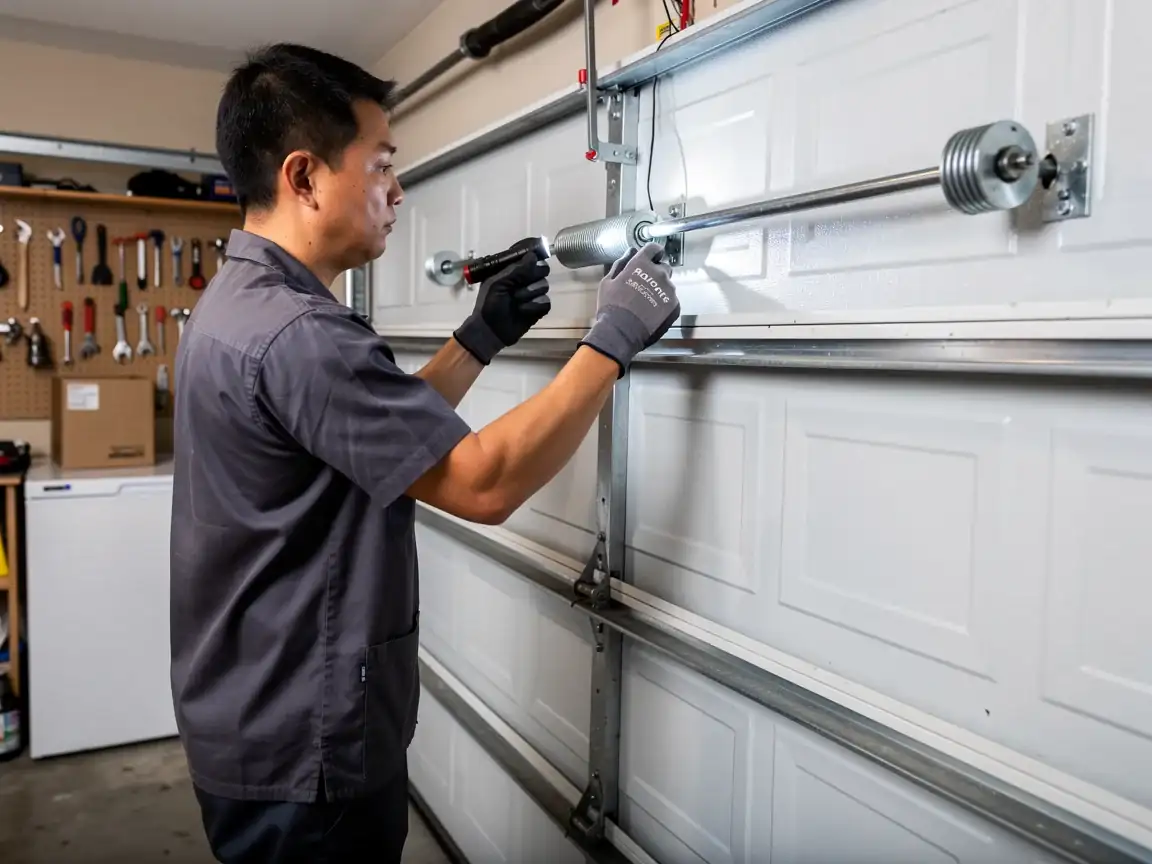
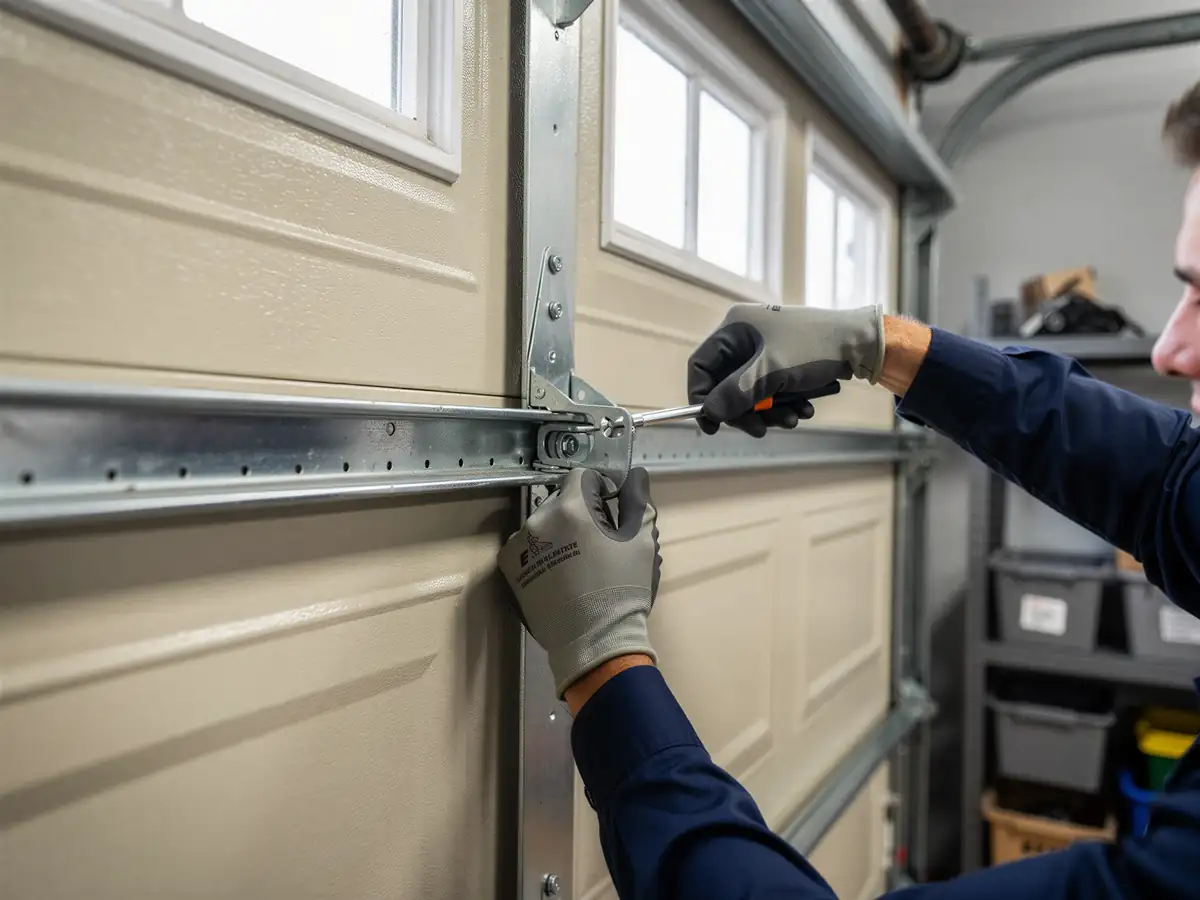
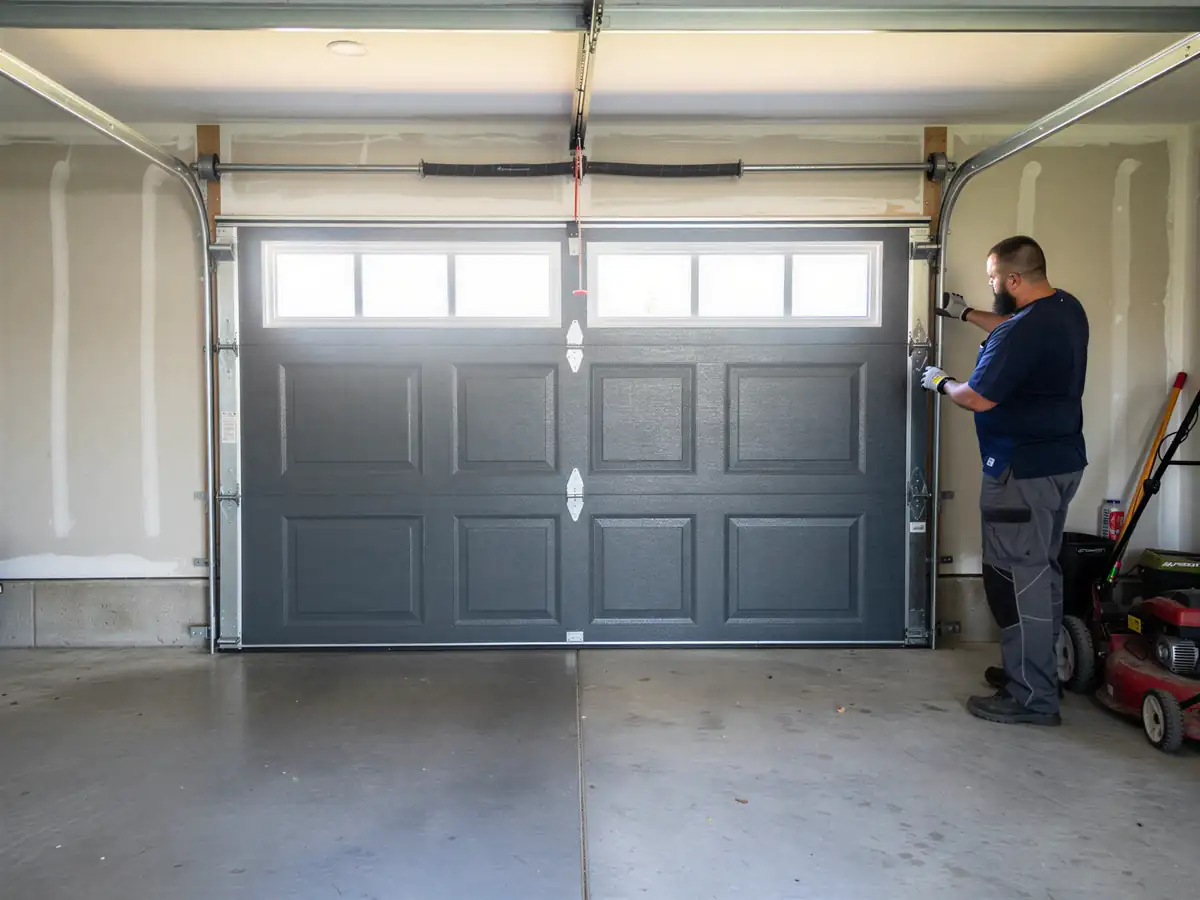
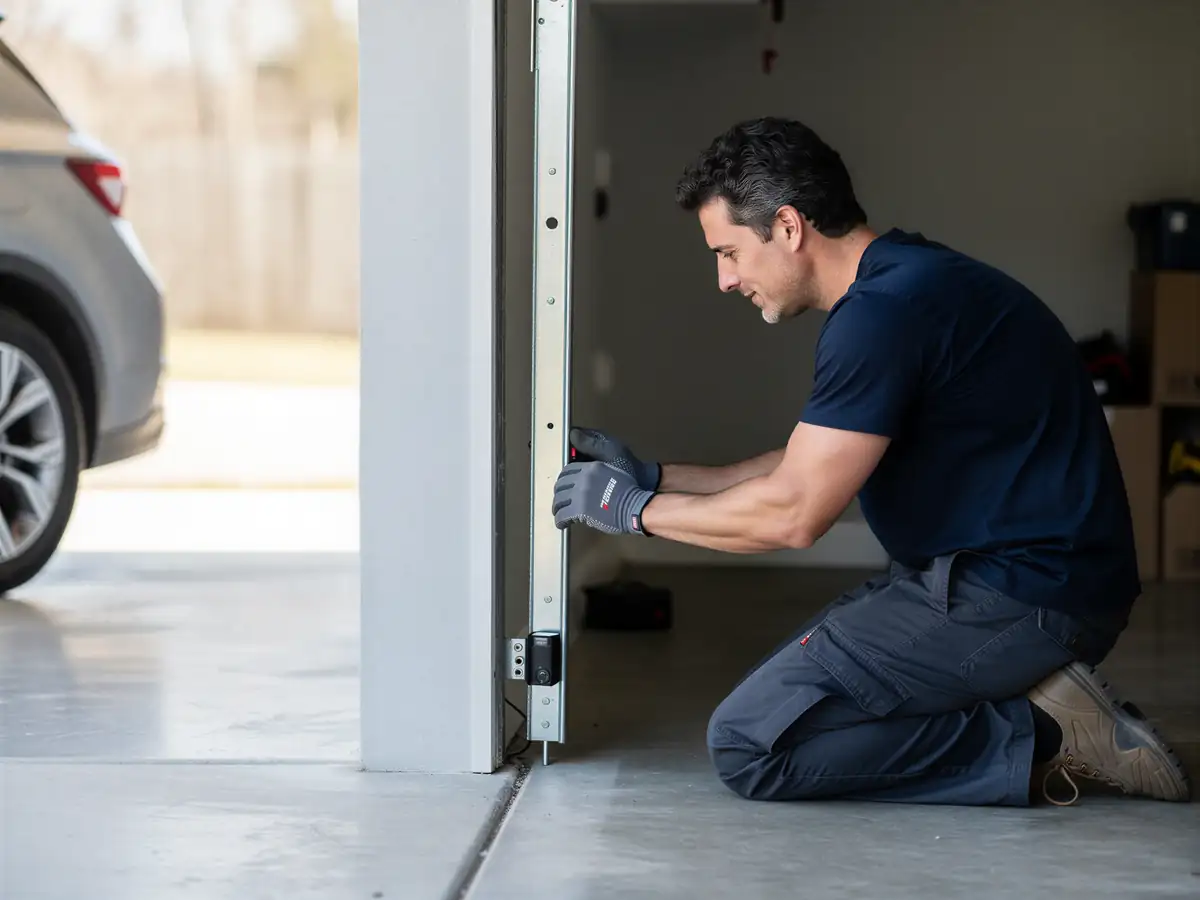
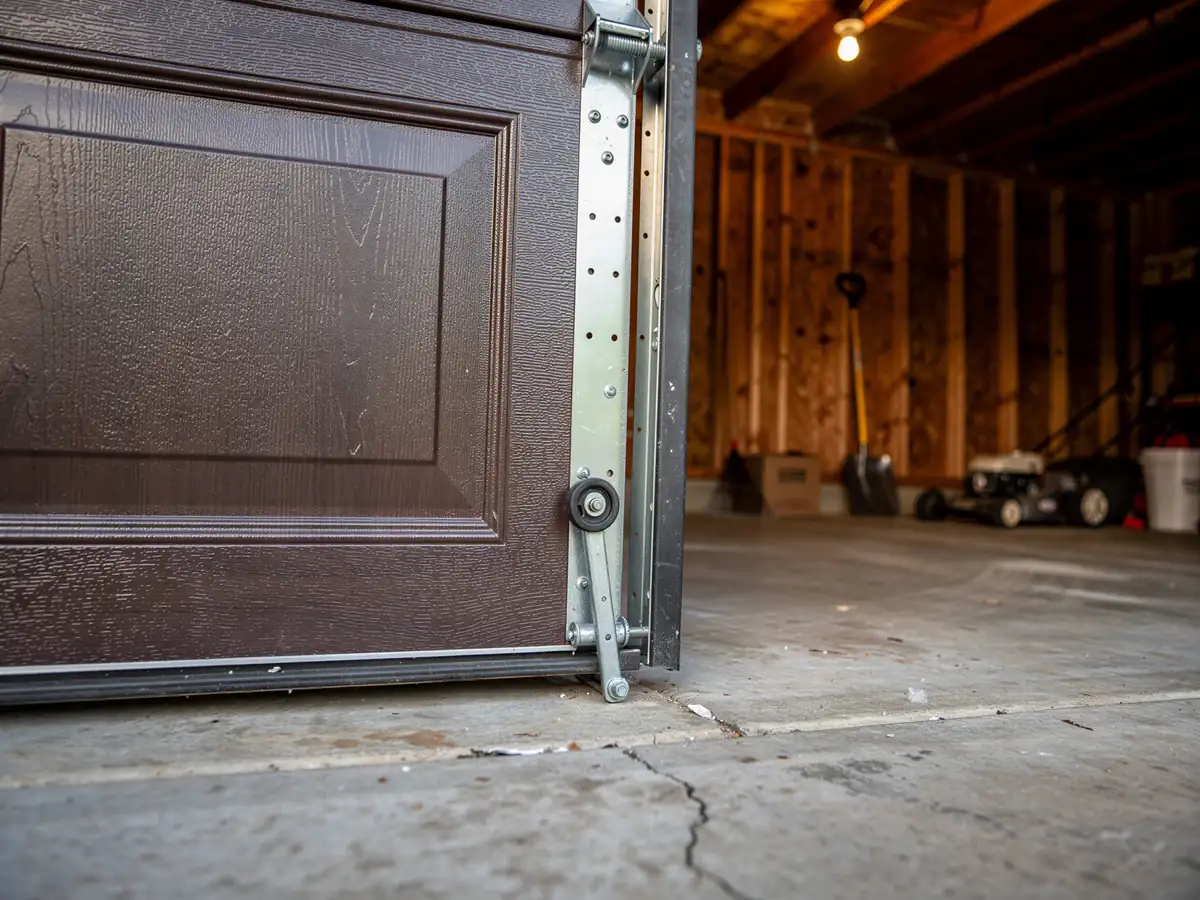
Most houses in Springtown went up around 1986, which puts them squarely in the era of lighter-gauge steel track and stamped roller brackets bolted straight to the jamb without much reinforcement. When a door jumps that track, the fix starts with figuring out whether the track itself got bent, whether a bracket pulled loose from the framing, or whether a roller sheared and let the panel drift sideways. On a door this age, the track sections are usually still the original run, so straightening them only works if the bend is minor. Past a certain point, a bent section of track is faster and cheaper to replace outright than to coax back into alignment, especially since track for a door this old doesn't always match what's sold today. We check the vertical tracks, the horizontal rails, the bottom rollers, and the brackets they ride in before touching anything, because reseating a door on bad track just means it jumps again in a few weeks.
How It Shows Up
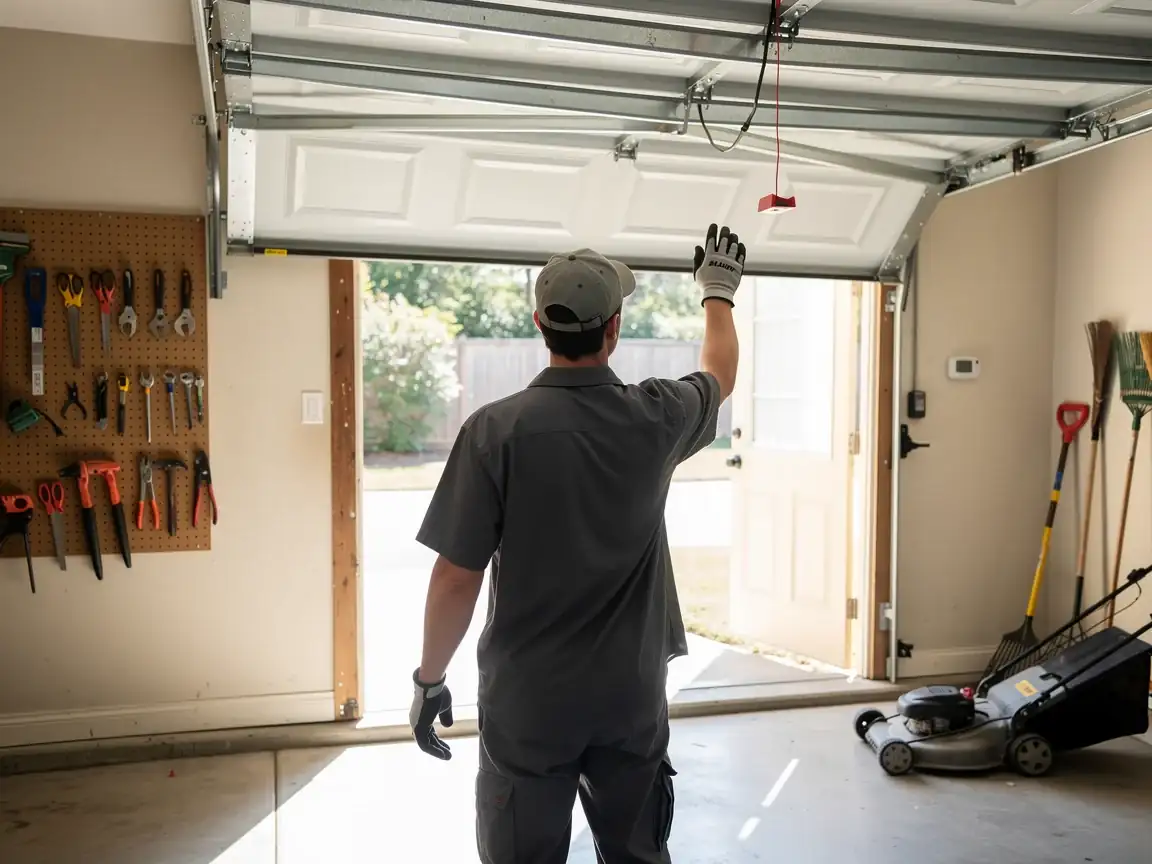
The most common version in this area is a door that looks fine sitting still but grinds, catches, or stutters partway through the cycle. Sometimes one side of the door visibly dips lower than the other as it travels, which usually means a roller has left the track on that side while the opposite side keeps pulling. Other times the door stops dead and the opener motor keeps straining against it, which is the opener trying to force a door that physically can't go any further. On older bracket setups like the ones common on 1980s-built houses here, you'll sometimes see the bracket itself pulled away from the wood, leaving a gap you can see daylight through. None of these are cosmetic. A door that's partially off track is a door that can come down wrong, and running the opener repeatedly once it's jumped tends to turn a bent bracket into a cracked panel.
Why It Happens Here
Springtown sits in a moderate-heat band, which isn't the dramatic swings you get further north, but it's still enough daily temperature movement to work on steel brackets and fasteners over three or four decades. Combined with a housing stock that's mostly mid-1980s, a lot of these doors are running original hardware that's had thirty-plus years of expansion and contraction cycling the screws loose in the jamb. Add a slightly misaligned opener arm or a roller that's worn down from the same decades of use, and it doesn't take much - a slammed door, a gust against an open panel, a roller finally giving out - to walk the door off the rail. It's not dramatic weather causing this; it's ordinary heat cycling on hardware that was never meant to last indefinitely.
Stocked Parts
We carry the rollers, brackets, and common track sections that fit the hardware typically installed on doors from this build era, since that's most of what we see out this way. What we don't stock is track or brackets specific to a door model that's been discontinued for years - if your door has unusual original hardware, that occasionally means a short wait on a part rather than a same-visit fix. We'll tell you up front if that's the situation rather than force a mismatched part onto your door.